True crime news logo

Sign up for our newsletter and get the latest stories

Never miss the latest true crime news, reviews and top lists — plus new podcasts, series, films and books.

You can unsubscribe with one click from any email.

True crime news logo

The international true crime destination. Cases, documentaries, podcasts and travel routes.

© 2026 truecrime.news. All rights reserved.

The cover of The Death Bed — Various Publishers — 2025

Deathbed Confessions: Why Criminals Unburden Their Consciences at the End

A new anthology examines the psychological and legal phenomenon of terminal-stage admissions—and how they reopen cold cases across the UK

Author
Susanne Sperling
Published
March 17, 2026 at 04:55 PM

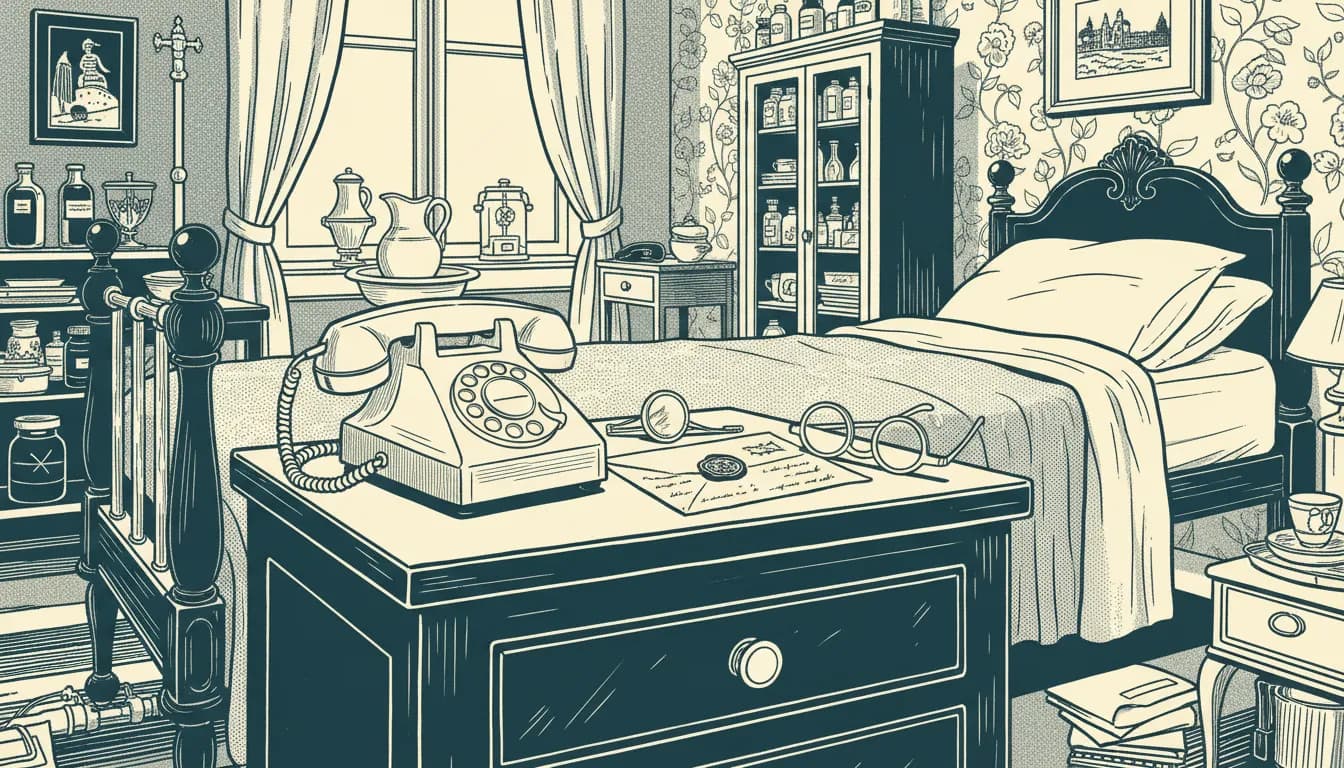
In the final hours of life, confined to hospital beds or hospice rooms, some of the most hardened criminals choose to unburden themselves. They confess to murders, disappearances, and crimes that police abandoned years—sometimes decades—earlier. This phenomenon sits at the intersection of psychology, criminology, and law: the deathbed confession.

A forthcoming anthology titled *The Death Bed* examines this cryptic intersection through documented British cases. Scheduled for publication in September 2025, the book synthesizes interviews with prison chaplains, medical professionals, and investigators to understand why perpetrators break their silence when mortality becomes certain.

**The Psychology of Conscience**

Criminologists have long noted a pattern: guilt accumulates differently under the shadow of impending death. Terminal illness—whether cancer, cardiac disease, or degenerative neurological conditions—appears to trigger a reassessment of legacy, morality, and the weight carried in silence. For some offenders, the prospect of facing judgment in an afterlife outweighs the legal consequences already served or still pending. Others may seek a form of redemption that imprisonment never provided.

The timing is crucial. Medication, pain management, and the psychological states induced by terminal decline complicate verification. How do British authorities determine truth from morphine-induced delusion? How much weight does a confession carry when the confessor cannot be cross-examined or tried? These questions have reshaped British legal procedure over the past two decades.

**The British Cold Case Framework**

Unlike some jurisdictions, the British system has developed specific protocols for evaluating deathbed statements. Police forces across England, Scotland, Wales, and Northern Ireland maintain cold case units—formally established teams revisiting unsolved homicides and disappearances. The National Crime Agency, established in 2013, coordinates complex historical investigations across regional boundaries.

When a confession emerges from a dying suspect, investigators must verify its credibility through corroborating evidence: crime scene forensics, witness statements from decades prior, physical evidence stored in police archives. DNA technology has revolutionized this process since the 1990s, allowing historical cases to be tested against modern databases.

However, many cold cases preceded forensic DNA collection. In these instances, a deathbed confession may be the only pathway to closure—or may raise more questions than it answers.

**Impact on Families**

The book's central concern is the aftermath of revelation. Families of victims who have spent twenty, thirty, or forty years seeking answers face a peculiar grief when confession finally arrives—but the perpetrator escapes prosecution through death. British law does not try the deceased; post-mortem convictions are impossible. The confession becomes documentary evidence of guilt, but never judicial fact.

For some families, this acknowledgment provides psychological closure. The uncertainty ends. For others, it deepens trauma: the killer has escaped earthly justice, and the legal system offers no forum for accountability or victim impact statements.

**Verification Challenges**

The anthology explores cases where deathbed statements have contradicted established evidence, where confessions proved false, and where admissions resolved decades-old mysteries through previously unknown details. British hospitals, particularly psychiatric and palliative care units, have become informal spaces where cold case investigators conduct bedside interviews—a practice raising ethical and legal questions about consent, capacity, and the role of healthcare settings in criminal investigation.

**Note on Verification**

The book's publisher details and specific case studies have not been independently verified through major British publishing databases, bookseller catalogues, or the British Library as of publication date. Readers are advised to confirm the title's availability through official channels before purchase.

Regardless of this particular anthology's status, the phenomenon it examines remains documented in British legal history: the deathbed confession as a closing chapter—for criminals, for families, and for the justice system itself.

Read more

Top 10 Podcasts fra Australien, KrimiNyt topliste
Top List

Australia's Top True Crime Podcasts 2026: The Essential Guide

De 10 Bedste True Crime Podcasts fra Australien, KrimiNyt topliste
Top List

Australia's Most Essential True Crime Podcasts

Top 10 True Crime Bøger på Dansk, KrimiNyt topliste
Top List

Denmark's Most Gripping True Crime Stories on Mofibo

Related Content
Top 10 Podcasts fra Australien, KrimiNyt topliste

Australia's Top True Crime Podcasts 2026: The Essential Guide

De 10 Bedste True Crime Podcasts fra Australien, KrimiNyt topliste

Australia's Most Essential True Crime Podcasts

Top 10 True Crime Bøger på Dansk, KrimiNyt topliste

Denmark's Most Gripping True Crime Stories on Mofibo

The cover of the book Deception about financial fraud in the UK — Various Publishers — 2025

UK Fraud Crisis: 2 Million Cases Half-Yearly Expose Global Weakness

Advertisement
SS

Susanne Sperling

View all stories →
Share this post: