Body Farm
A human decomposition research facility where donated bodies are studied under controlled conditions to advance forensic science and improve postmortem interval estimation.
Definition
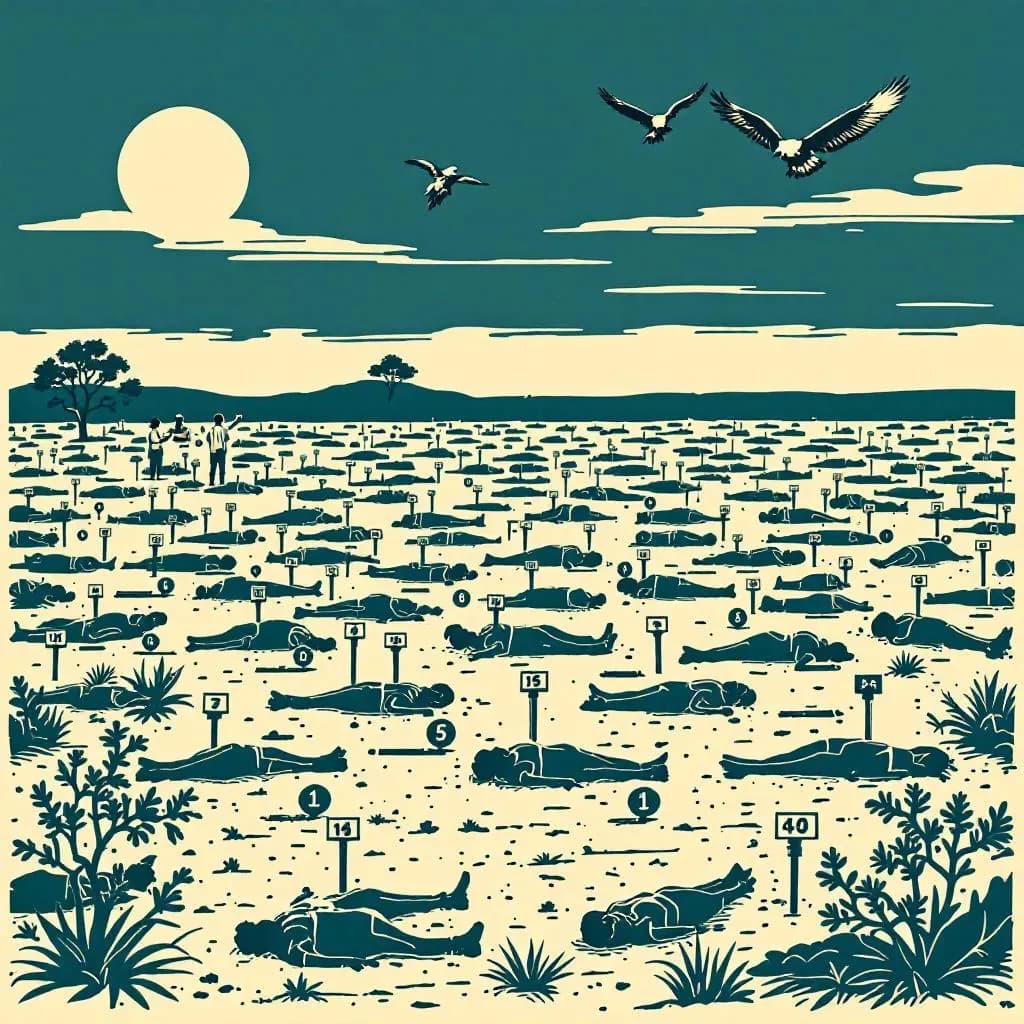
A body farm is a controlled outdoor research facility where human cadavers are placed in various environments to study the decomposition process. These facilities are not defined by criminal law but serve as essential tools in forensic anthropology and death investigation. The donated bodies are exposed to natural elements under monitored conditions, allowing researchers to observe and document the stages of decay, insect activity, environmental effects, and skeletal changes over time.
The first and most well-known body farm is the Forensic Anthropology Center at the University of Tennessee, established in 1981 by Dr. William Bass. Since then, additional facilities have been established at universities across the United States and internationally. These research sites typically span several acres and contain bodies placed in different scenarios—buried at various depths, submerged in water, enclosed in vehicles, or left on the surface under different types of vegetation.
The primary purpose of body farm research is to provide law enforcement and forensic experts with data to estimate time since death more accurately in criminal investigations. By understanding how environmental factors such as temperature, humidity, soil composition, and seasonal changes affect decomposition rates, investigators can narrow down timelines in homicide cases and better interpret crime scene evidence.
Bodies used at these facilities come from individuals who specifically donated their remains to science, typically through anatomical gift programs regulated under state adoption of the Uniform Anatomical Gift Act. The legal framework governing body farms falls under anatomical donation laws rather than criminal statutes, with federal provisions found in the context of organ and tissue donation regulations.
Research conducted at body farms has contributed significantly to forensic entomology, taphonomy, and the development of forensic techniques used in criminal investigations worldwide. The facilities also serve as training grounds for law enforcement personnel, forensic anthropologists, and medical examiners who need practical experience with human remains in various states of decomposition.