True crime news logo
  • Krimidex

Sign up for our newsletter and get the latest stories

Never miss the latest true crime news, reviews and top lists — plus new podcasts, series, films and books.

You can unsubscribe with one click from any email.

True crime news logo

The international true crime destination. Cases, documentaries, podcasts and travel routes.

© 2026 truecrime.news. All rights reserved.

Krimidex/Extortion
Legal termDenmark

Extortion

When fear becomes a weapon – methods, consequences, and investigative challenges
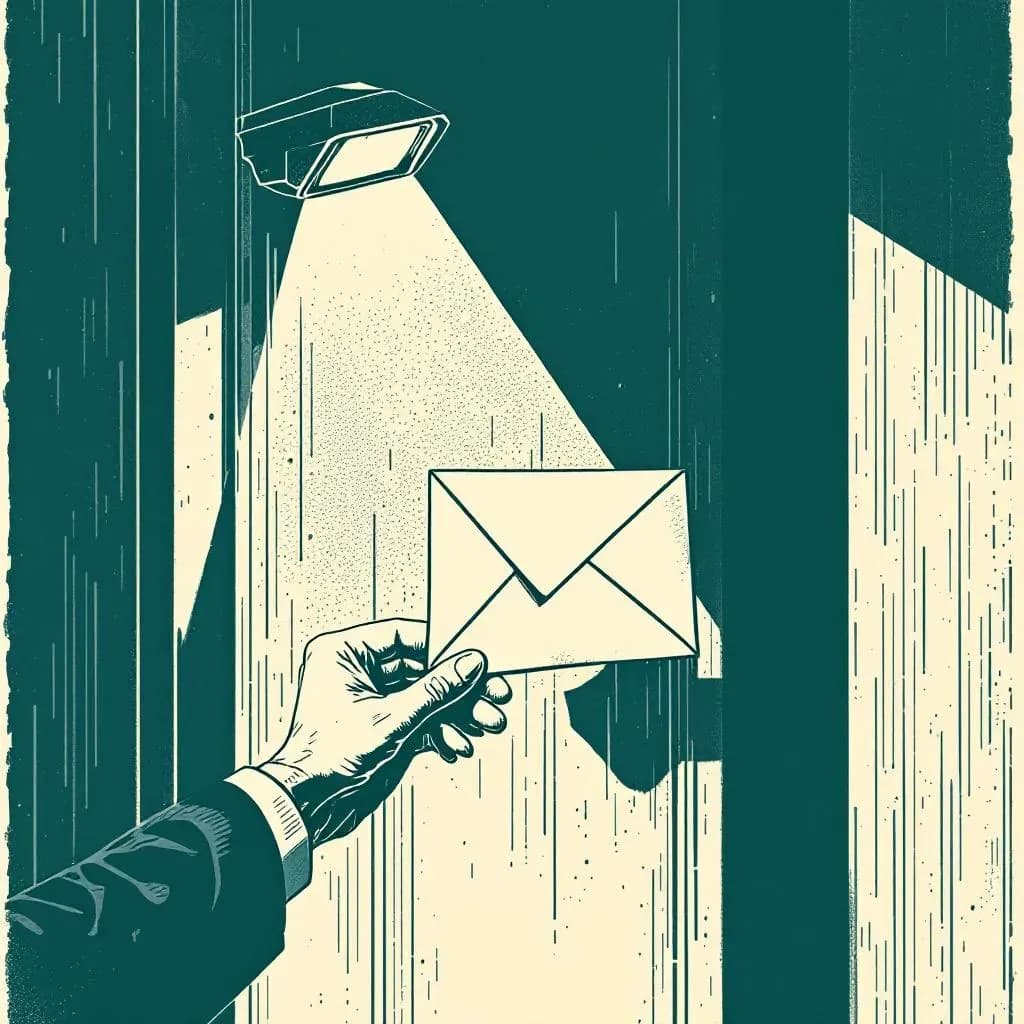
Afpresning — linocut illustration

Definition

Extortion exploits fear of violence or exposure. Understand the cynical methods, from physical coercion to digital 'sextortion,' and the deep scars it leaves.


When fear becomes a weapon – methods, consequences, and investigative challenges


What is extortion, and how is vulnerability exploited?


Extortion, within true crime, is defined as the criminal act where a perpetrator, through threats or coercion, forces a victim to hand over money, possessions, or services. This type of crime, which often takes the form of financial crime when the goal is economic gain, deeply violates the victim's integrity and freedom. The fear of violence, disclosure of compromising information, or serious damage to reputation or business is cynically exploited. The core of extortion is the imbalanced power dynamic, where the perpetrator exploits the victim's vulnerability for personal gain.


Extortion methods: From threats to 'sextortion'


The methods behind extortion are diverse, ranging from direct physical threats and demands for protection money to more sophisticated forms like digital extortion. This includes situations where hackers use ransomware to lock data systems and demand a ransom, as well as 'sextortion,' where intimate images or videos are used as a brutal means of pressure. Regardless of the method, extortion often leads to profound psychological consequences for victims, who may experience feelings of powerlessness and isolation. The constant threat and fear that the perpetrator will carry out their demands create a state of persistent stress and anxiety, with potentially long-lasting effects on the victim's quality of life.


Why is extortion hard to fight? Challenges for police


The investigation of extortion cases is often complicated. Victims, out of fear or shame, may hesitate to report the crime, especially if the threats involve the disclosure of sensitive personal information. The digital age introduces further challenges, as perpetrators can operate anonymously, often from abroad, making both tracking and effective prosecution difficult. Extortion is thus a serious and persistent form of crime that constantly challenges law enforcement and individual security. This underscores the importance of understanding the underlying mechanisms and criminal behavior that drive these types of offenses.



Did this spark your interest? Explore real-life extortion cases, from demands for protection money to advanced 'sextortion' – find our compelling cases below.

Related entries

Afpresning

Cases

No cases yet.

Related articles

Dagobert: Der Kaufhaus-Erpresser Arno Funke

Dagobert: The Car Painter's Terror Campaign

Between 1992 and 1993, a single man terrorized all of Germany with bomb threats against major department stores. Arno Funke, operating under the alias 'Dagobert,' evaded capture for months before finally being arrested—and now features in a new Amazon series starring Friedrich Mücke.

A laptop screen displaying the Ashley Madison logo amidst lines of code, symbolizing the 2015 data breach that exposed millions of users and led to global blackmail and personal tragedies

Ashley Madison Breach: 37 Million Exposed in 2015 Hack

In July 2015, hackers calling themselves "The Impact Team" breached Ashley Madison, a website marketed for extramarital affairs, stealing personal data from approximately 37 million users across 40 countries. The incident exposed not only intimate details but also widespread corporate deception that defined the scandal.

A weathered biker vest with a prominent Bandidos MC patch hangs on a rusty nail in a dimly lit garage, surrounded by tools and spare motorcycle parts.

Denmark Dissolves Bandidos MC in Historic Organized Crime Ruling

A Danish court has ordered the dissolution of Bandidos Motorcycle Club Denmark, marking a significant enforcement action against organized crime in Scandinavia. The ruling found the organization operated as a unified criminal enterprise engaged in murder, assault, and drug trafficking across the country.

A figure resembling Gilberto Orejuela, wearing a business suit, sits at a large wooden desk cluttered with stacks of cash, maps, and a small ornate globe in an upscale office setting.

The Cali Cartel: How a Colombian Empire Conquered Global Markets

While the Medellín Cartel made headlines with brutality, the Cali Cartel built a more sophisticated empire through corruption and strategic silence. By the mid-1990s, this Colombian organization controlled over 80% of the world's cocaine market—making it arguably the most powerful criminal enterprise ever assembled.

A worn wooden door in a narrow Naples alleyway, partially ajar, revealing a tangle of wires and computer screens glowing inside, symbolizing the Camorra's transition from traditional crime to global cybercrime operations.

Naples Mafia Reaches Across Europe: Camorra's Global Empire

The Camorra, a Neapolitan organized crime syndicate, has transformed from a regional Italian threat into a transnational criminal powerhouse with operations spanning Europe, North America, and Asia. Fueled by drug trafficking, weapons smuggling, and environmental crimes, the organization generates billions annually while leaving a trail of violence that claims innocent civilians.

A figure resembling Joseph Colombo lies surrounded by chaos during the 1971 assassination attempt; visible crowds and a sense of panic in a bustling New York street.

The Colombo Crime Family: New York's Most Brutal Mafia Dynasty

The Colombo crime family emerged in 1928 as New York's youngest of the Five Families, built on bootlegging and eventually dominating organized crime across the Northeast. Known for extreme internal violence and brutality, the family's decline from 150 made members to just 75 by 1993 reflects decades of devastating internal wars and federal prosecution.

A figure resembling Terry Adams, a shadowy figure in a suit, stands in front of Scotland Yard's iconic revolving sign, symbolizing the deep infiltration of corruption within the system.

The Adams Family: London's Most Ruthless Drug Syndicate

Between the 1980s and 2000s, Terry, Tommy, and Patsy Adams transformed their Clerkenwell neighborhood into the headquarters of one of Britain's most powerful organized crime groups. Operating with brutal efficiency and a code of silence, the Clerkenwell Crime Syndicate controlled London's drug trade and left at least 25 murder victims in their wake.

A figure resembling Simone “Sam the Plumber” DeCavalcante stands in a construction site, surrounded by blueprints and half-built structures, symbolizing his control over New Jersey's construction industry in the 1960s.

How the FBI Dismantled America's Real Sopranos

The DeCavalcante crime family, operating across New Jersey and New York as part of La Cosa Nostra, inspired HBO's The Sopranos. Between 1998 and 2015, the FBI launched major operations that would ultimately dismantle the family's leadership through informants, undercover agents, and the unprecedented cooperation of made members.

A cracked Equifax logo on a glass door with reflection of anonymous figures in suits, symbolizing espionage and security failure, against the backdrop of a busy urban landscape.

U.S. Charges Chinese Military Officers in Massive Equifax Hack

U.S. federal prosecutors charged four members of China's People's Liberation Army on February 10, 2020, with orchestrating one of the largest data breaches in history. The defendants allegedly exploited a vulnerability in Equifax's systems to steal sensitive information from approximately 145 million Americans over a two-month period in 2017.

A figure resembling John Paul Getty III with a bandaged head sits alone on a cobblestone street in Rome, a shadowy figure lurking nearby, symbolizing the 'Ndrangheta's threat.

The Getty Fortune's Darkest Hour: A Teenage Heir's Nightmare

On July 10, 1973, John Paul Getty III was dragged from a Rome street by members of the 'Ndrangheta and held captive in a Calabrian cave. What followed was a harrowing negotiation involving a severed ear, a multimillion-dollar ransom, and a billionaire grandfather's reluctance to pay.

A laptop screen displaying lines of code and visible API tokens, surrounded by notes and diagrams illustrating a data scraping scheme related to LinkedIn profiles, in a cluttered tech workspace.

700 Million LinkedIn Users' Data Sold on Dark Web Forum

In June 2021, a hacker using the username TomLiner posted personal data from approximately 700 million LinkedIn users—roughly 93% of the platform's membership—for sale on the dark web forum RaidForums. LinkedIn disputed the characterization as a breach, arguing the data came from public profiles and external sources rather than a direct hack of its systems.

A Starwood-branded server room with tangled Ethernet cables and a laptop displaying a web shell interface, symbolizing the vulnerability exploited in Marriott's data breach affecting 500 million guests

Marriott's Massive Breach: 383 Million Guests Exposed

Marriott International disclosed on November 30, 2018, that hackers had accessed its Starwood guest reservation database for approximately four years, affecting up to 383 million guests. The breach exposed sensitive personal information including names, addresses, passport numbers, and encrypted payment data—making it one of the largest data compromises in history.

Facts

Type
Legal term
Jurisdiction
Denmark
Last updated
21 May 2026