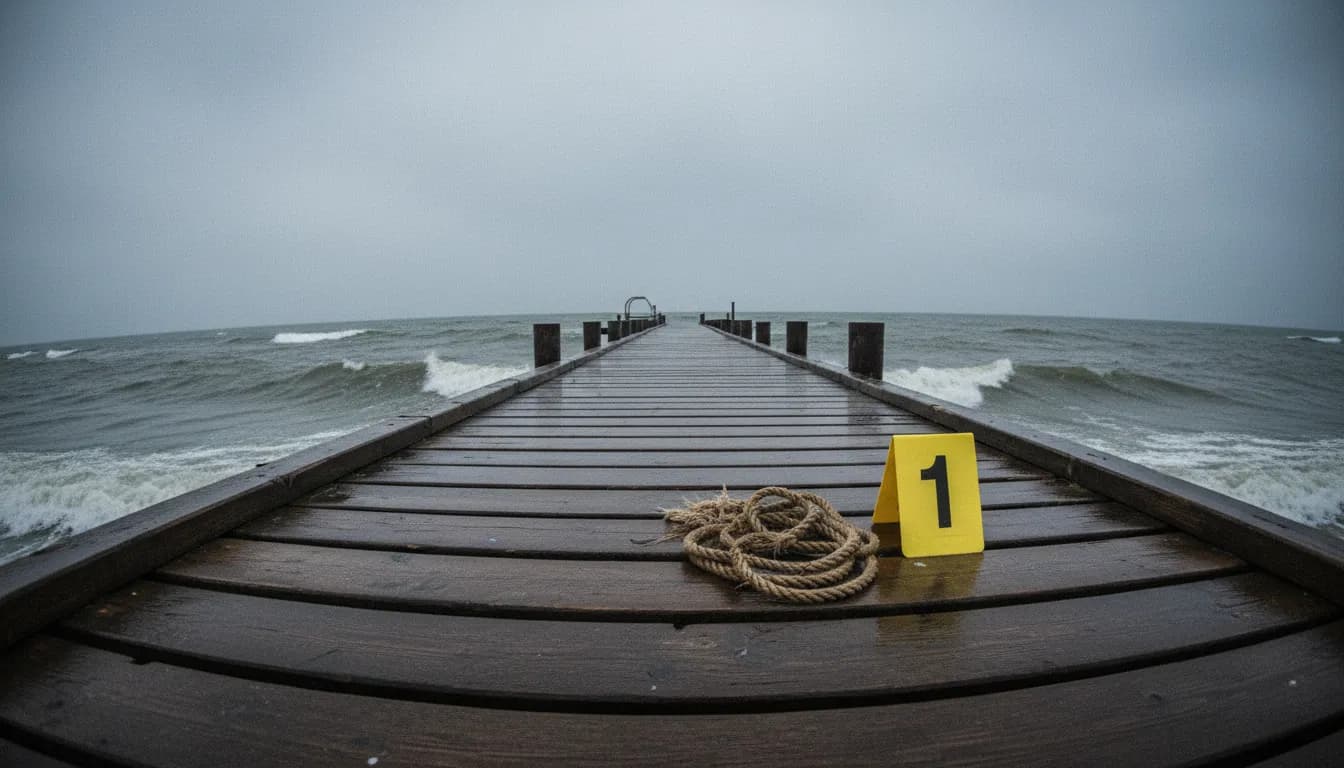
Murder by the Baltic Sea
A descriptive label for homicide cases occurring in or near the Baltic Sea, not a fixed legal term. Jurisdiction depends on location, vessel flag state, and applicable federal or international maritime law.

Definition
"Murder by the Baltic Sea" is a descriptive phrase used in true crime contexts to refer to homicide cases associated with the Baltic Sea region, not a statutory term in U.S. federal criminal law. In legal terms, such a case would be analyzed as a homicide committed within maritime jurisdiction, with the applicable law determined by the location of the offense, the nationality of the vessel, and jurisdictional principles governing crimes at sea.
Under U.S. federal law, murders occurring on the high seas or within special maritime and territorial jurisdiction are prosecuted under 18 U.S.C. § 1111, the general federal murder statute. Jurisdiction is established through 18 U.S.C. § 7, which defines the special maritime and territorial jurisdiction of the United States to include American vessels on the high seas, certain waters within U.S. territorial limits, and other enumerated locations. The Supreme Court in United States v. Rodgers, 150 U.S. 249 (1893), clarified that federal jurisdiction extends to crimes committed on the high seas and within admiralty jurisdiction, reinforcing the reach of federal criminal law over maritime offenses.
For cases occurring outside any U.S. state or judicial district, venue provisions under 18 U.S.C. § 3238 allow prosecution in the district where the defendant is arrested or first brought. This ensures that federal courts retain jurisdiction over crimes committed in international waters or foreign territorial seas, provided other jurisdictional requirements are met. In practice, whether a murder "by the Baltic Sea" falls under U.S. law depends on factors such as the flag of the vessel, the nationality of the victim and accused, and the presence of a nexus to U.S. interests.
The Baltic Sea itself is bordered by multiple sovereign nations, including Germany, Poland, Sweden, Denmark, Finland, Estonia, Latvia, Lithuania, and Russia. Jurisdiction over a homicide in these waters typically rests with the coastal state if committed in territorial waters, or with the flag state if committed on a vessel in international waters. International treaties and maritime law principles, including the United Nations Convention on the Law of the Sea, govern jurisdictional conflicts and cooperation in investigating and prosecuting such offenses.