Siege
Negotiation, fear, and fatal consequences when perpetrators are surrounded
Definition
What happens when perpetrators barricade themselves? Delve into the nerve-racking dynamics of a siege, police dilemmas, and the risks that define these crises.
Negotiation, fear, and fatal consequences when perpetrators are surrounded
Anatomy of a siege: traits of acute crisis situations
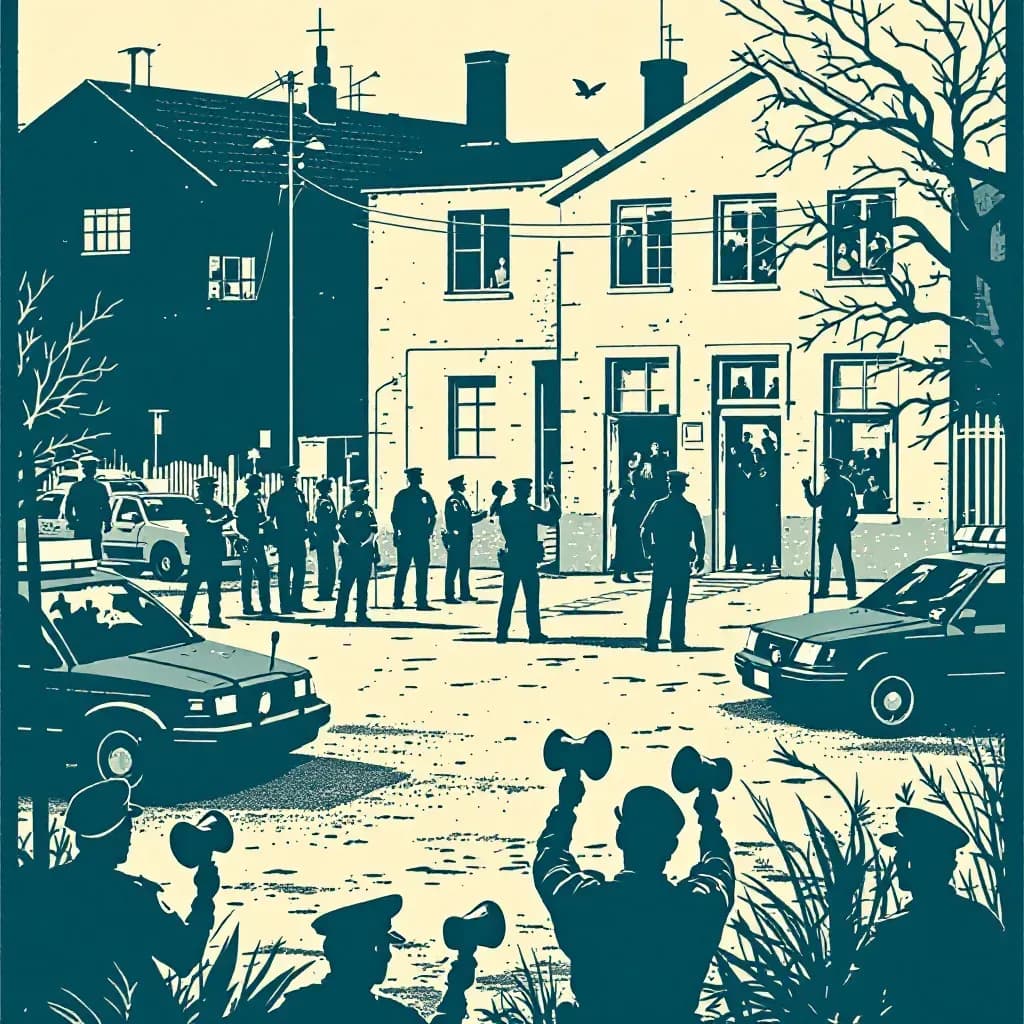
In a true crime context, a siege refers to an acute and critical crisis situation where one or more individuals, often armed perpetrators, have barricaded themselves and are surrounded by police or special forces, typically in a building or another confined area. These high-stakes situations are characterized by intense tension and imminent danger, as they frequently involve threats to life, potential hostage-taking, and create a deadlocked confrontation that can last for many hours or even days. The central challenge during a siege is to achieve a peaceful resolution, which requires patience, precise intelligence gathering, and highly specialized negotiation skills, particularly from the police and relevant authorities.
Hostages' fate: negotiating or using force dilemma
The dynamics of a siege situation are complex and multifaceted, often forming the core of compelling true crime narratives precisely because human lives are directly at stake and hostage safety may be threatened. Negotiations between perpetrators and police, often conducted by specialized police negotiators, are a key element where psychological pressure and tactical considerations carry significant weight. Decision-makers within the police and other response units face difficult dilemmas: Should they wait and continue dialogue in hopes of a surrender, or is an offensive intervention necessary to avert further danger, especially if the well-being and safety of hostages are threatened? The perpetrators' motives for barricading themselves can vary widely, from failed robberies that escalate, to desperate acts by individuals in deep crisis, or planned acts of terrorism.