True crime news logo
  • Krimidex

Sign up for our newsletter and get the latest stories

Never miss the latest true crime news, reviews and top lists — plus new podcasts, series, films and books.

You can unsubscribe with one click from any email.

True crime news logo

The international true crime destination. Cases, documentaries, podcasts and travel routes.

© 2026 truecrime.news. All rights reserved.

Cover of Strange Buildings — Pushkin Press — 2026

Uketsu's Masked Mystery: Inside 'Strange Buildings'

A Japanese author explores eleven dark crime cases through architecture—while keeping his identity hidden from the world

Author
Susanne Sperling
Published
March 19, 2026 at 03:30 PM

Japanese author Uketsu published 'Strange Buildings' as his third book in the 'Strange' series, a 384-page crime fiction novel that has captivated readers with its blend of architectural mystery and psychological darkness. The author remains one of contemporary Japan's most intriguing literary figures, maintaining an almost complete veil of anonymity in an era of author visibility.

Uketsu's personal brand is unlike any mainstream author. He appears in public wearing a white papier-mâché mask, black bodysuit, and uses a voice changer during any public communication. This theatrical approach to anonymity reflects his background before literary success: he was working at a supermarket when he began posting surreal videos online, gradually building an audience fascinated by his unconventional artistic vision. Today, only approximately 30 people reportedly know his true identity.

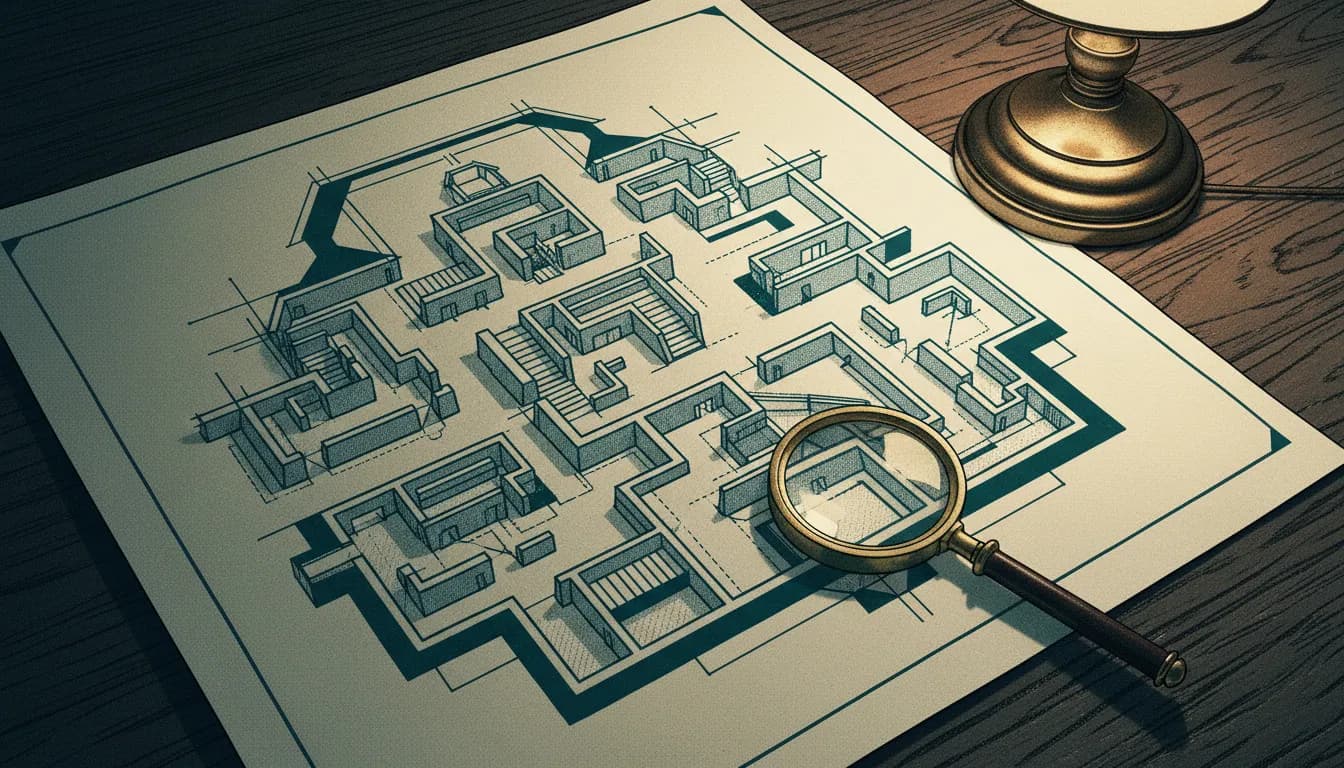
'Strange Buildings' stands as the third installment in Uketsu's 'Strange' series, following 'Strange Pictures' and 'Strange Houses' (though it's also catalogued as the second book in the Strange Houses sequence, reflecting the series' complex architecture). The novel's structure revolves around eleven distinct cases—each exploring a different building or residential structure—that are intricately connected by a central, overarching mystery.

The narrative backbone involves Hikura Homes, a corporation specializing in residential design that serves as the dark thread binding all eleven cases together. This architectural company becomes the focal point through which readers encounter the novel's various crimes and mysteries. Two central characters guide readers through this labyrinth: Tatsuyuki Iimura, a forensic cleaner whose work puts him in contact with crime scenes, and Kurihara, described as a draughtsman with detective-like investigative qualities.
Among the eleven cases featured, one particular narrative stands out: the 'Tsuhara house' case set in Shizuoka, described as a 2020 crime scene involving a 16-year-old boy and multiple family members. This case exemplifies Uketsu's approach to blending specific, grounded details with the broader architectural mystery of Hikura Homes' involvement in people's lives.

Uketsu resides in Kanagawa Prefecture, Japan, where he has built his literary career while maintaining his distinctive public persona. His work bridges crime fiction and horror, appealing to audiences who appreciate psychological depth and architectural symbolism in their crime narratives. The 'Strange' series has established him as a significant voice in contemporary Japanese crime fiction, despite—or perhaps because of—his refusal to reveal his face or voice to the public.

The international reception of 'Strange Buildings' reflects growing interest in Japanese crime fiction beyond the traditional mainstream. English-language readers and critics have engaged with the novel's complex narrative structure and atmospheric exploration of how spaces themselves can become entangled in criminal narratives. This reception underscores how Uketsu's anonymity paradoxically amplifies his literary presence: the mystery surrounding the author becomes inseparable from the mysteries within his books.

'Strange Buildings' ultimately represents a unique moment in contemporary crime fiction—where the author's deliberate obscurity, the architectural focus of the narrative, and the interconnected case structure create something that feels both deliberately constructed and genuinely unsettling. Whether readers encounter this work through its Japanese origins or in international translation and adaptation, Uketsu's masked presence remains a compelling reminder that sometimes the most engaging stories come from those who choose to remain hidden.

Read more

Trippeldrabet: Likvideringen af de tre sovende mænd — kriminalsag
Case

Trippeldrabet: Likvideringen af de tre sovende mænd

Brixtofte-sagen — korruption og magtmisbrug i Farum Kommune
Case

The Brixtofte Case — Danish municipal corruption scandal

Anna Klemens — Skandinaviens sidste hekselynchning
Case

Anna Klemens — Scandinavia's Last Witch Lynching (1800)

Related Content
Trippeldrabet: Likvideringen af de tre sovende mænd — kriminalsag

Trippeldrabet: Likvideringen af de tre sovende mænd

Brixtofte-sagen — korruption og magtmisbrug i Farum Kommune

The Brixtofte Case — Danish municipal corruption scandal

Anna Klemens — Skandinaviens sidste hekselynchning

Anna Klemens — Scandinavia's Last Witch Lynching (1800)

Bandidos Denmark — sagen om opløsningen af rockerklubben

Bandidos Denmark — court-ordered dissolution of biker club

Advertisement
SS

Susanne Sperling

Se alle artikler →
Del dette opslag: