Inside Denmark's Criminal Underworld: Eight Decades of Organized Crime
New book traces evolution of Scandinavian organized crime from Nazi occupation to modern international networks
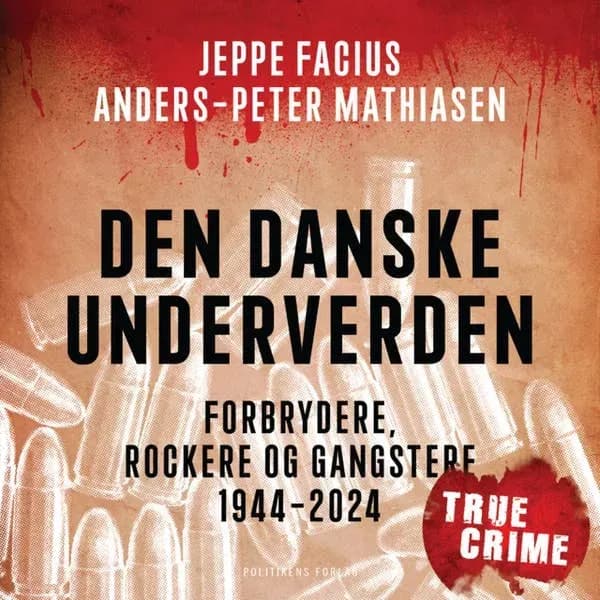
Two of Denmark's most decorated investigative journalists have released a sweeping historical account of organized crime in Scandinavia, spanning from the final year of Nazi occupation through 2024. 'The Danish Underworld: A Chronicle of Crime 1944-2024,' written by Anders-Peter Mathiasen and Jeppe Facius, both Cavling Prize recipients, documents how a small Nordic nation evolved into a nexus for international criminal enterprises.
Published by Politikens Forlag in 2024, the 312-page volume traces the emergence of Denmark's organized crime landscape across eight decades, beginning in 1944 as German forces withdrew from the country. Rather than presenting an isolated Scandinavian story, the book contextualizes how Denmark's geographic position between Northern Europe and the Baltic became strategically valuable for smuggling operations and criminal networks.
The authors document several pivotal criminal operations and figures that shaped the nation's underworld. Among the cases examined is the "Spider Affair" (Edderkoppeaffæren), a complex case illustrating the sophistication of Danish organized crime. The book also chronicles extensive cigarette and hashish smuggling networks that flourished throughout the post-war decades—operations that would have parallels in other European countries managing contraband trafficking through major ports.
A particularly striking narrative involves a man from Denmark's upper class who became a major criminal figure. He served the longest continuous prison sentence in Danish history—a record later surpassed only by a man convicted of killing four police officers. This trajectory illustrates how organized crime transcends social boundaries, a phenomenon observed in criminal justice systems across the globe.