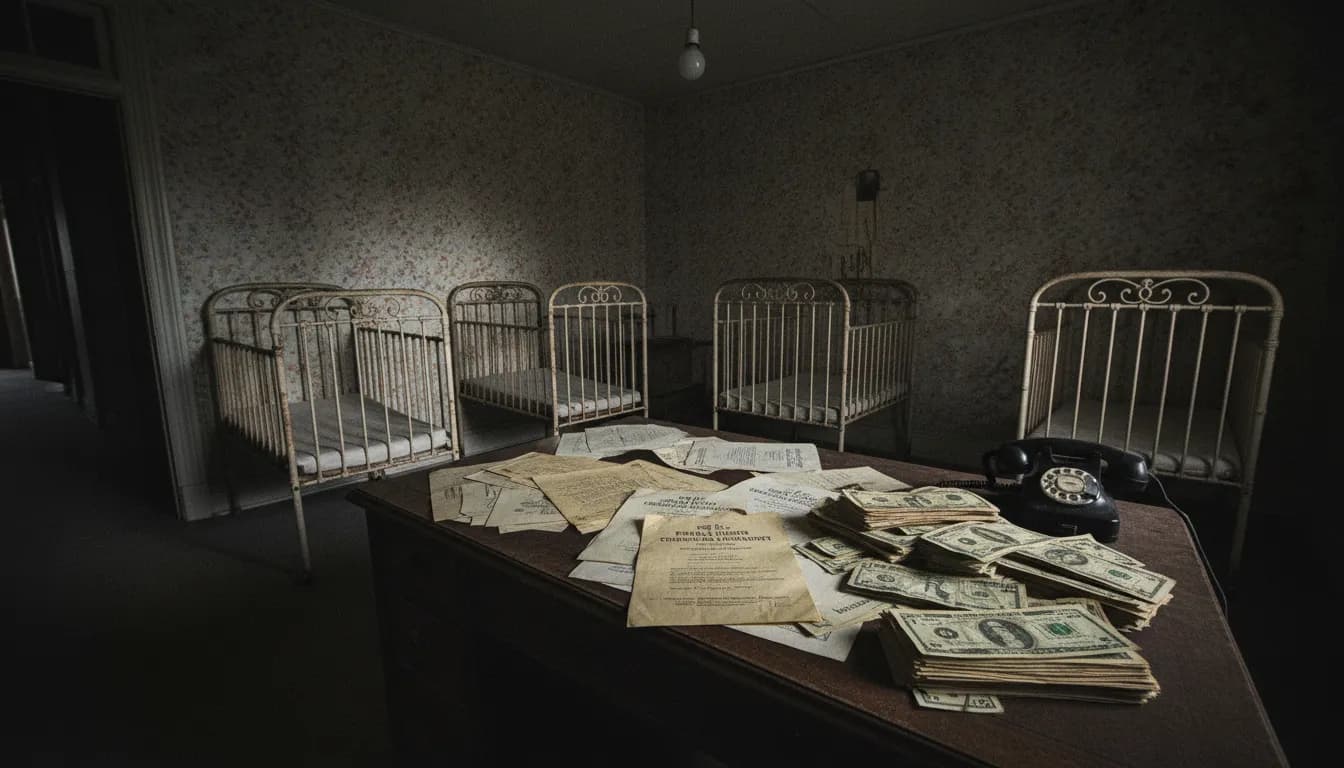
Georgia Tann, born July 18, 1891, operated one of America's most damaging child trafficking schemes from her Memphis base, exploiting desperate families and vulnerable children for nearly three decades. When state authorities finally moved to prosecute her in September 1950, Tann died of uterine cancer on September 15—three days before charges were announced, avoiding any criminal accountability for one of the nation's darkest adoption scandals.
Tann's operation, formally the Memphis branch of the Tennessee Children's Home Society, began around 1926 as an ostensibly legitimate adoption agency. Instead, it became a sophisticated black market enterprise that acquired children through multiple predatory methods. She kidnapped infants and older children directly. She coerced poor, single, and unwed mothers into surrendering babies by posing as medical professionals, later falsely claiming the children had died. She removed children from nursery schools and temporary placements, then destroyed records claiming no documentation existed. In some cases, mothers signed adoption papers while sedated, believing they were signing hospital forms.
To make children more marketable to wealthy buyers, Tann's staff fabricated compelling backgrounds—falsely claiming infants descended from socialites or physicians. This deception became central to her sales pitch, particularly to out-of-state adoptive families in New York, California, and other wealthy regions.
Tann's financial operation was equally ruthless. While Tennessee law capped adoption fees at $7, she charged desperate parents up to $5,000 per child. She pocketed over 80% of revenues through fraudulent charges for background checks, travel arrangements, and paperwork processing. Earnings were hidden in secret bank accounts under fake company names and never reported to the IRS. Over roughly 26 years, her criminal enterprise generated more than $1 million in illegal profits—equivalent to nearly $14 million in today's currency.
The human cost of Tann's operation was staggering. Children in her facilities faced systematic physical, emotional, and sexual abuse. Her all-female staff, who wore white nursing uniforms despite being largely untrained and often substance-abusing, routinely sedated children to manage them. Those deemed "unadoptable" suffered particularly severe neglect—malnutrition, untreated illnesses, and preventable deaths. Staff ignored medical advice for sick children, contributing to what became the highest infant mortality rate in the United States during the 1930s. Conservative estimates suggest approximately 500 children died due to mistreatment. Some victims were buried in Elmwood Cemetery in Memphis; many others remain unaccounted for.