True crime news logo

Sign up for our newsletter and get the latest stories

Never miss the latest true crime news, reviews and top lists — plus new podcasts, series, films and books.

You can unsubscribe with one click from any email.

True crime news logo

The international true crime destination. Cases, documentaries, podcasts and travel routes.

© 2026 truecrime.news. All rights reserved.

Sagsmappe

Swiss Banking Scandal: Credit Suisse's Illegal Surveillance of Departing Executive

How a wealth manager's job switch to rival UBS sparked a corporate espionage case that exposed ethical failures at the banking giant
Mappe Åbnet: JUNE 6, 2025 AT 10:00 AM
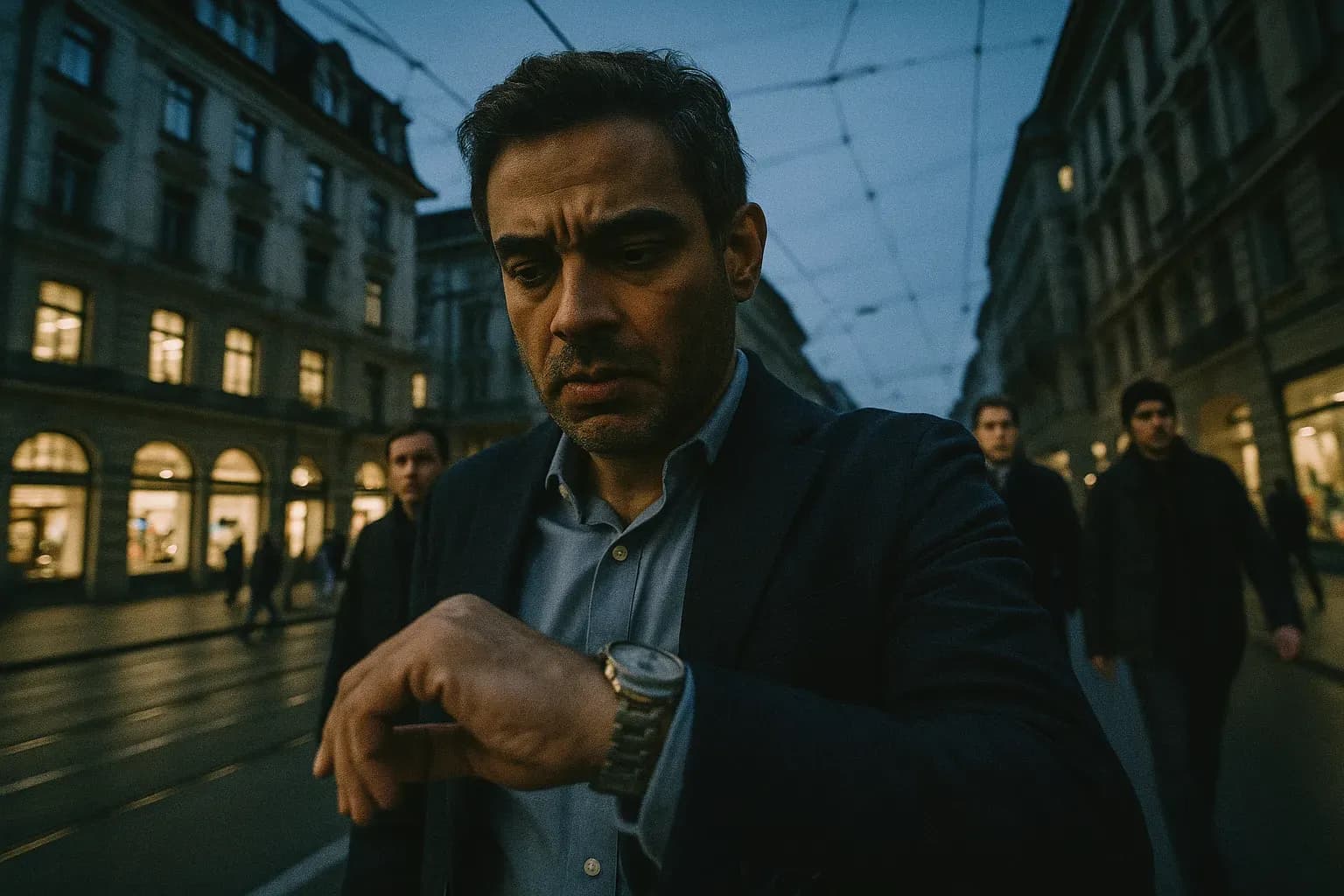
A figure resembling Iqbal Khan stands on a bustling Zurich street, checking his watch with a wary expression, as anonymous figures in the background appear to be following him discreetly.
BEVIS

Sagsdetaljer

Quick Facts

Klassifikation:

Surveillance
Scandal
Corruption
Leadership
Switzerland
Economic crime
Conspiracy theory

Quick Facts

LocationZürich, Switzerland

In the summer of 2019, Switzerland's second-largest bank embarked on an extraordinary campaign that would culminate in one of the country's most significant corporate governance scandals. Credit Suisse, based in Zurich, had authorized a covert surveillance operation targeting one of its own senior executives—Iqbal Khan—following his departure to rival UBS.

Khan, who served as Credit Suisse's global head of wealth management, announced his move to UBS in July 2019. The move itself was not unusual in competitive banking circles; executive poaching between rival institutions is common practice. What followed was not.

Within days, Credit Suisse's operations chief, Pierre-Olivier Bouée, authorized a private investigation firm to conduct intensive surveillance on Khan. Between July and September 2019, private detectives tracked Khan's movements throughout Zurich—monitoring not only his solo activities but also following him and his wife together. The operation was both extensive and systematic, representing the kind of invasive monitoring typically associated with espionage rather than corporate human resources management.

The surveillance continued until September 2019, when Khan himself confronted one of the private investigators following him through the streets of Zurich. The encounter was a turning point: what had been a hidden operation suddenly became visible, and word began spreading through Zurich's tight financial community.

Bouée, who had authorized the surveillance without obtaining broader approval from Credit Suisse's board or senior management, resigned on October 1, 2019—just weeks after the confrontation. The bank's global head of security departed around the same time. More tragically, the private detective who had organized the surveillance operation died by suicide in October 2019, adding a darker dimension to an already troubling story.


Espionage
Fraud
Money
Bank robbery
Bribery
Psychopathy
mordssag
justitssvigt
overerstatningskommission
domstol
justitsmordet
hvidvaskning
Finanstilsynet
mordsager
magtmisbrug
forlovelse
sundhedsbedrageri
Sagsstatus
Løst
Sted
Zürich, Switzerland

Swiss authorities moved quickly. Zurich prosecutors filed charges against unknown perpetrators for coercion and threats. The case raised serious questions about corporate power, executive overreach, and the boundaries of acceptable corporate behavior—even in a nation with strong business traditions.

Credit Suisse's board subsequently issued a damning internal assessment, declaring that the surveillance mandate had been "improper and disproportionate." The acknowledgment represented a rare institutional admission of wrongdoing, yet it came only after the operation had been exposed.

For nearly two years, the case wound through Swiss courts while Khan continued his career at UBS, eventually becoming co-head of the rival bank's global wealth management division. The proceedings attracted international attention, highlighting vulnerabilities in how even major financial institutions govern executive behavior and police their own internal conduct.

In 2021, Credit Suisse and the relevant parties reached an out-of-court settlement. The criminal investigation was quietly terminated without formal charges or conviction. No individual faced prosecution, and no corporate penalties were publicly disclosed. The resolution reflected a negotiated end rather than a judicial verdict—a pattern not uncommon in high-profile Swiss business cases involving sensitive matters and powerful institutions.

The Khan affair exposed deeper systemic issues within Credit Suisse that would foreshadow the bank's later troubles. Questions about internal governance, the concentration of power in individual executives, and inadequate oversight mechanisms emerged as recurring themes. For international observers, the case illustrated how even Switzerland's most prestigious financial institutions could be vulnerable to ethical lapses and organizational dysfunction.

The scandal also underscored broader questions about corporate surveillance in the modern financial sector. While non-disclosure agreements and confidentiality protections are standard when executives change firms, the aggressive monitoring of Khan's personal movements crossed into territory that alarmed Swiss regulators and the public alike.

Today, the case serves as a cautionary tale about the hidden costs of competitive ruthlessness in global banking and a reminder that even regulated financial centers can fail to prevent serious abuses of corporate power when oversight mechanisms are weak or individual executives operate without sufficient accountability.

Read more

Dirty Billions expose money laundering at Danske Bank
Book

Danske Bank's $230 Billion Money Laundering Scandal

American Greed exposes the dark world of financial crime
TV Series

American Greed: How CNBC Documents White-Collar Crime

Operation X exposes hidden societal issues
TV Series

Danish TV Documentary Exposes Helgstrand Dressage in Undercover Investigation

Related Content
Dirty Billions expose money laundering at Danske Bank

Danske Bank's $230 Billion Money Laundering Scandal

American Greed exposes the dark world of financial crime

American Greed: How CNBC Documents White-Collar Crime

Operation X exposes hidden societal issues

Danish TV Documentary Exposes Helgstrand Dressage in Undercover Investigation

In God We Trust reveals Madoff's deceitful empire

How a Secretary Exposed Madoff's $65 Billion Fraud

Advertisement
SS

Susanne Sperling

View all stories →
Share this post: