The Alcatraz Escape That Remains Unsolved 60 Years Later
How three men vanished from America's most secure prison in 1962—and whether they survived remains a mystery
Quick Facts
On the night of June 11, 1962, after lights out at Alcatraz Federal Penitentiary, three men slipped through ventilation grates and disappeared into San Francisco Bay. Frank Morris, John Anglin, and Clarence Anglin would become the subjects of one of America's most enduring true crime mysteries—one that remains officially unsolved to this day.
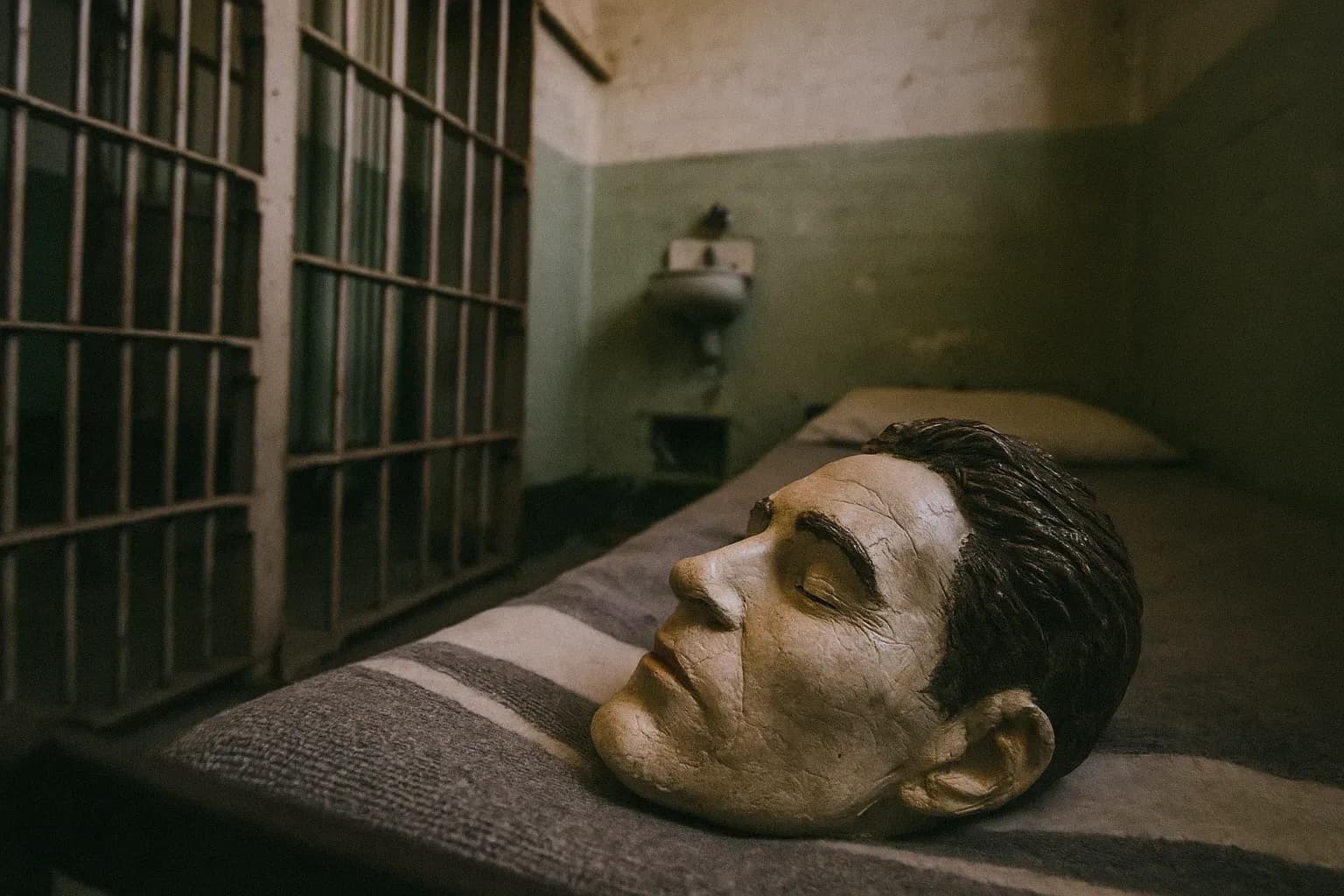
Morris, the mastermind, had meticulously planned the escape over six months. The three men had access to adjacent cells in B-Block, which allowed them to work together in secret. Using nothing more than spoons as chisels, they slowly widened ventilation vents while covering their work with papier-mâché dummy heads fashioned with real human hair. These decoys would fool the guards during the initial headcount.
Their preparation extended beyond the cells. The men accessed an unguarded utility corridor hidden behind their cellblock and climbed to the prison's workshop area. Over months, they stole and improvised materials—approximately 50 raincoats were fashioned into an inflatable raft and life preservers, based on plans they found in a March 1962 *Popular Mechanics* article titled "Your Life Preserver."
On the night of the escape, the three men removed their ventilation grates and crawled through a maze of utility corridors and service pipes. They climbed to the prison roof, then descended roughly 50 feet down a kitchen vent pipe. From there, they scaled two 12-foot barbed-wire fences to reach the northeast shoreline—a security blind spot—and launched their improvised raft into the dark bay.
A fourth man, Allen West, was meant to join them. But when escape night came, the cement around his vent had hardened, and he could not break free. He remained imprisoned, watching his cellmates disappear into history.