When Teaching Evolution Became a Crime
The 1925 Scopes Trial and America's fight over religion in schools
Quick Facts
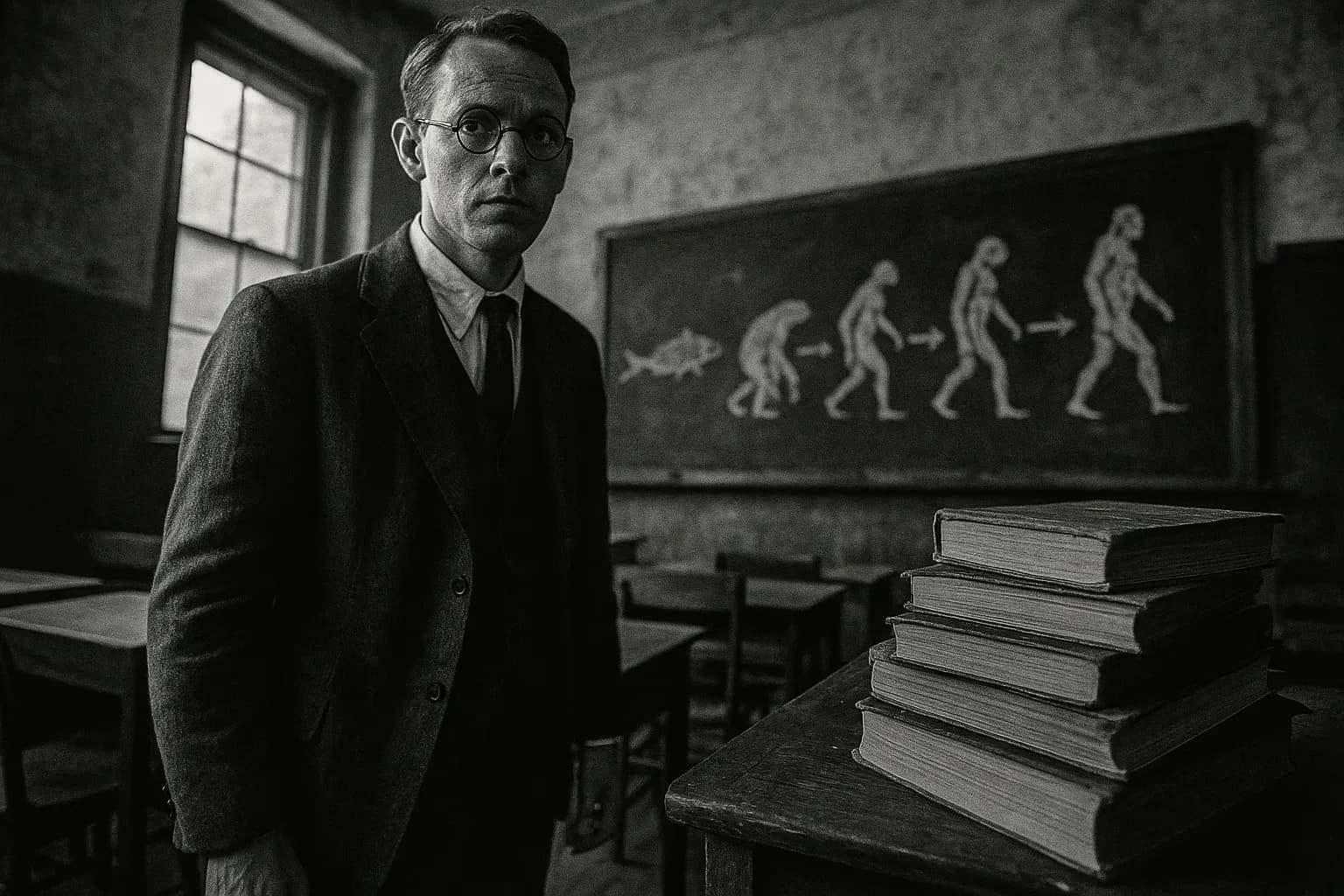
On May 7, 1925, high school teacher John Thomas Scopes was arrested in Dayton, Tennessee, for violating a state law that had been on the books for less than three months. His crime: teaching human evolution to his biology class. What followed was one of the most publicized trials in American legal history—a clash between science and religious doctrine that would dominate headlines and divide the nation.
The Butler Act, passed by the Tennessee legislature in March 1925, made it illegal for teachers in public schools to present "any theory that denies the story of the Divine Creation of man as taught in the Bible, and to teach instead that man has descended from a lower order of animals." The law represented a victory for fundamentalist Christian groups concerned that Darwinian evolution was undermining biblical authority.
But the trial itself was something of a setup. Dayton's business leaders, seeking publicity for their struggling town, encouraged Scopes to participate in a test case. The American Civil Liberties Union, eager to challenge the Butler Act's constitutionality, had publicly offered to defend anyone prosecuted under it. Scopes, a 24-year-old math and physics teacher who had substituted in biology class, agreed to be the defendant—despite uncertainty about whether he had actually taught evolution directly.
The courtroom became theater. When the trial began on July 10, 1925, it attracted an unprecedented level of media attention. This was the first trial to be broadcast live on radio, reaching audiences across the country. Dayton was overrun with journalists, curious onlookers, and religious activists. The atmosphere outside the courthouse was carnival-like, with vendors selling refreshments and religious signs covering the town.