True crime news logo

Sign up for our newsletter and get the latest stories

Never miss the latest true crime news, reviews and top lists — plus new podcasts, series, films and books.

You can unsubscribe with one click from any email.

True crime news logo

The international true crime destination. Cases, documentaries, podcasts and travel routes.

© 2026 truecrime.news. All rights reserved.

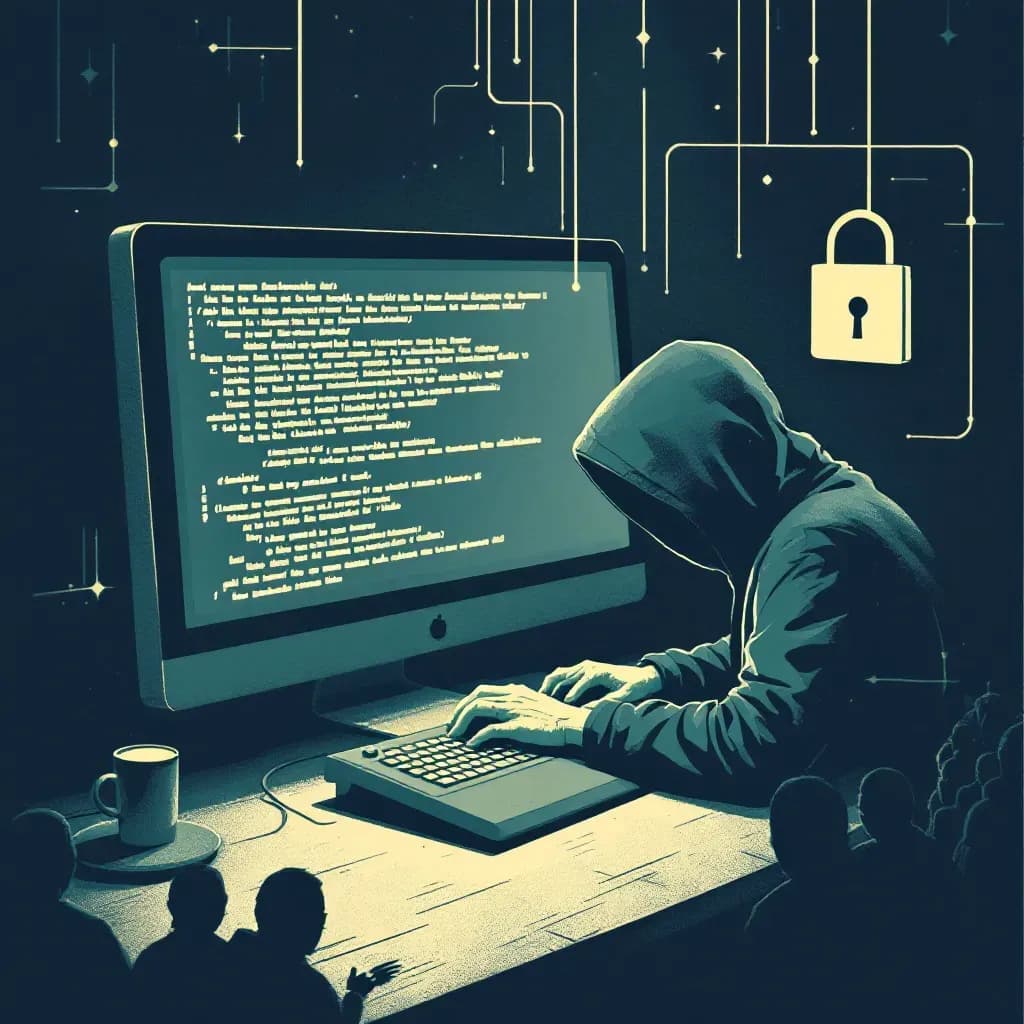
A dimly lit computer screen displaying lines of code, a hacker in a dark hoodie typing on a keyboard, digital symbols of a padlock indicating data theft, and shadowy figures suggesting cyber espionage.

Hacking

The invisible crime that enables extortion, fraud, and data theft

Hacking: Understand the illegal digital intrusion that enables everything from data theft and ransomware to espionage. Uncover the threat in true crime cases.


The invisible crime that enables extortion, fraud, and data theft


What is hacking, and why is it a major digital threat?


Hacking, within a true crime context, refers to the illegal and unauthorized access to, control over, or manipulation of computer systems, networks, or digital devices. It is a criminal act that breaches digital security measures, often with the intent to access, steal, alter, or destroy sensitive data and information. Furthermore, compromised systems can be misused for additional criminal activities such as digital fraud, extortion (often in the form of ransomware), or cyberespionage. This type of digital intrusion, also known as a cyberattack, ranges from simple attempts to guess passwords to advanced, sophisticated attacks that exploit complex vulnerabilities in software and systems. This makes hacking a central component in many forms of modern cybercrime and a persistent threat to both individual and societal digital security.


Ransomware and stalking: Hacking's criminal uses explained


The relevance of hacking in true crime cases is immense, as it constitutes a standalone crime and serves as a tool for committing other forms of digital crime. Perpetrators can use hacking to commit identity theft by stealing personal information, carry out extensive financial fraud, or extort victims, for example, by encrypting data with ransomware until a ransom is paid. Hacking can also facilitate illegal digital surveillance and digital stalking. The consequences for both individual victims and larger organizations can be catastrophic, ranging from financial ruin and reputational damage to deep personal violation and extensive data breaches where large amounts of sensitive information are compromised. The investigation of hacking cases is notoriously complex and resource-intensive. It requires specialized digital investigation and computer forensics and often involves an international hunt for perpetrators who skillfully hide their digital footprints and operate anonymously across borders.


Behind attacks: What drives hackers, and how to stop them?


The motives behind hacking are diverse and can include financial gain, industrial espionage, politically motivated hacktivism – where hacking is used as a means of protest – or personal revenge. The constant and rapid technological development creates an ongoing race between malicious hackers, who continuously seek out and exploit new security holes and vulnerabilities, and cybersecurity experts, who work to identify, patch, and prevent these digital threats. A thorough understanding of hacking and its methods is therefore essential to comprehend the modern threat landscape and the extent of cybercrime. This highlights the vulnerability of our increasingly digitized society and the complex, persistent challenge this poses for law enforcement, data security, and general public safety.


Explore cases of digital extortion and sophisticated data theft. Read concrete examples of hacking in action – explore our in-depth cases below.


Posts Tagged “Hacking”

12 posts
Maksim Yakubets – Evil Corp Anführer
ProfileMay 7, 2026

Maksim Yakubets – Evil Corp Anführer

Maksim Yakubets ist der Kopf von Evil Corp, einer der gefährlichsten Cyberkriminellen-Organisationen der Welt. Das FBI setzt auf ihn eine Belohnung von 10 Millionen Dollar aus – die höchste je für einen Hacker gebotene Summe.

CyberkriminalitätEvil CorpDridex-Malware+4
A cracked Equifax logo on a glass door with reflection of anonymous figures in suits, symbolizing espionage and security failure, against the backdrop of a busy urban landscape.
CaseJune 6, 2025

U.S. Charges Chinese Military Officers in Massive Equifax Hack

U.S. federal prosecutors charged four members of China's People's Liberation Army on February 10, 2020, with orchestrating one of the largest data breaches in history. The defendants allegedly exploited a vulnerability in Equifax's systems to steal sensitive information from approximately 145 million Americans over a two-month period in 2017.

Data breachIdentity theftCrypto+29
A laptop screen displaying lines of code and visible API tokens, surrounded by notes and diagrams illustrating a data scraping scheme related to LinkedIn profiles, in a cluttered tech workspace.
CaseJune 6, 2025

700 Million LinkedIn Users' Data Sold on Dark Web Forum

In June 2021, a hacker using the username TomLiner posted personal data from approximately 700 million LinkedIn users—roughly 93% of the platform's membership—for sale on the dark web forum RaidForums. LinkedIn disputed the characterization as a breach, arguing the data came from public profiles and external sources rather than a direct hack of its systems.

Data breachCybercrimeHacking+16
A Starwood-branded server room with tangled Ethernet cables and a laptop displaying a web shell interface, symbolizing the vulnerability exploited in Marriott's data breach affecting 500 million guests
CaseJune 6, 2025

Marriott's Massive Breach: 383 Million Guests Exposed

Marriott International disclosed on November 30, 2018, that hackers had accessed its Starwood guest reservation database for approximately four years, affecting up to 383 million guests. The breach exposed sensitive personal information including names, addresses, passport numbers, and encrypted payment data—making it one of the largest data compromises in history.

Data breachIdentity theftEspionage+21
A safe with the Mt. Gox logo stands open in a dimly lit Tokyo office. Papers are strewn across the desk, and a monitor displays declining Bitcoin values, symbolizing the collapse and chaos of 2014.
CaseJune 6, 2025

The Mt. Gox Collapse: How Bitcoin's Largest Exchange Lost $450M

In February 2014, Mt. Gox—once the world's largest Bitcoin exchange—abruptly suspended trading and went offline, revealing the theft of over 744,000 Bitcoins worth approximately $450 million. The collapse exposed critical vulnerabilities in early cryptocurrency infrastructure and led to the arrest of CEO Mark Karpelès, a French businessman who had acquired the exchange just three years earlier.

Economic crimeCryptoHacking+22
A compromised Microsoft Exchange server displays a terminal screen filled with cryptic code, cables snaking out as a technician in the background examines the setup, symbolizing the widespread impact of the 2021 Hafnium cyberattack.
CaseJune 6, 2025

Chinese State Hackers Breached Thousands via Microsoft Exchange

A state-sponsored Chinese threat actor known as HAFNIUM launched a sophisticated cyberattack against Microsoft Exchange servers beginning January 6, 2021, remaining undetected for two months before Microsoft's March disclosure revealed the breach had compromised thousands of organizations worldwide.

CybercrimeEspionageData breach+21
A computer screen displays the Robinhood logo alongside an alert notification icon, symbolizing the massive user data breach and subsequent cybersecurity scandal.
CaseJune 6, 2025

7 Million Robinhood Users Hit in November 2021 Data Breach

Robinhood, the popular investment app, suffered a significant data breach on November 3, 2021, exposing personal information belonging to approximately 7 million users. The unauthorized access occurred through social engineering of a customer support employee.

Data breachEconomic crimeHacking+16
A figure resembling Kim Jong-un watches a scene from "The Interview" on a laptop screen, the Sony Pictures logo visible in the background, symbolizing the motive behind the North Korean cyber attack on Hollywood.
CaseJune 6, 2025

North Korea's Hack on Sony: A Cyber Attack on Free Speech

In November 2014, North Korean state-sponsored hackers infiltrated Sony Pictures Entertainment, stealing millions of files and threatening theaters showing the comedy film 'The Interview.' The attack marked the first time the U.S. government publicly attributed a cyber assault to a nation-state—and raised urgent questions about digital security and censorship.

CybercrimeAssassinationExtortion+26
A computer screen displaying a terminal with lines of code, a reflection showing a faint Amazon logo, symbolizing the Twitch 2021 leak exposé of streamers' earnings and Amazon's unreleased projects.
CaseJune 6, 2025

Twitch Breach Exposed Top Streamers' Million-Dollar Payouts

A hacker breached Twitch's internal systems in early October 2021, leaking source code, passwords, and payout data for thousands of streamers. The leaked information exposed two years of earnings data, revealing that top creators earned millions from subscriptions, ad revenue, and Bits donations.

Data breachHackingInternet+17
A computer screen displaying the WannaCry ransomware message, with Bitcoin symbols and a countdown timer, amid a chaotic office with disorganized NHS documents under flickering fluorescent lights.
CaseJune 6, 2025

WannaCry: The Ransomware Attack That Crippled the NHS

On May 12, 2017, the WannaCry ransomware attack struck more than 300,000 computers across 150 countries, but its impact on Britain's National Health Service proved particularly devastating. The attack infected at least 80 NHS trusts and over 600 primary care organizations, forcing hospitals to cancel thousands of procedures and revert to pen-and-paper record-keeping.

CybercrimeRansomData breach+24
A computer screen displaying a Yahoo login page with a small sticky note that reads "Password Breach" placed nearby, suggesting a breach into user accounts.
CaseJune 6, 2025

Yahoo's 3 Billion Account Breach: History's Largest Hack

Yahoo suffered the largest data breach in history when hackers compromised 3 billion user accounts in August 2013, followed by a second breach affecting 500 million accounts in late 2014. The company didn't publicly disclose either incident until 2016, triggering investigations, lawsuits, and a $300 million reduction in its acquisition price.

Data breachEspionageHacking+19
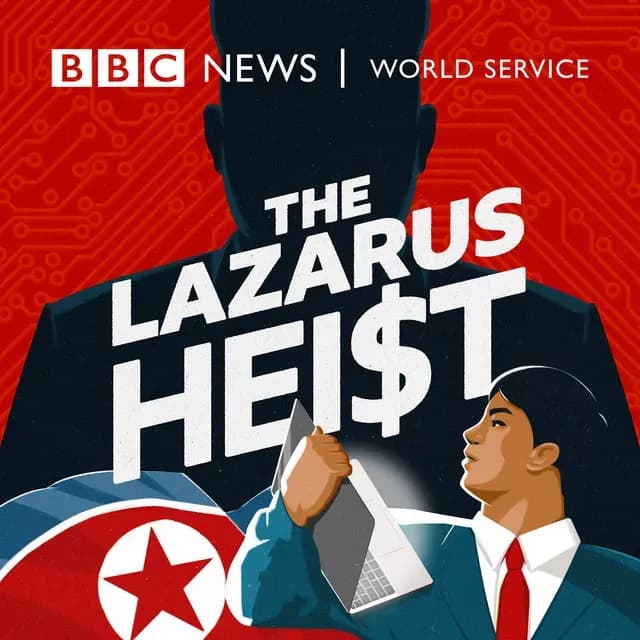
The Lazarus Heist: exposing the global cyber threat
PodcastMay 26, 2025

Inside Lazarus: North Korea's $2 Billion Cyber Empire

The Lazarus Group, a North Korean state-sponsored hacking operation active since at least 2009, has stolen billions in cryptocurrency and launched devastating attacks on governments and corporations worldwide. The FBI confirms the group serves as a financial engine for Kim Jong-un's regime, circumventing international sanctions.

CybercrimeHackingConspiracy theory+16