On August 28, 1984, Josef Fritzl lured his 18-year-old daughter Elisabeth to the basement of the family home in Amstetten, Lower Austria, under the pretense of helping her move a door. Using an ether-soaked towel, he incapacitated her and locked her in a hidden chamber he had spent years constructing. For the next 24 years, Elisabeth remained imprisoned in that basement dungeon while her father raped her repeatedly—"thousands of times" according to investigators' accounts.
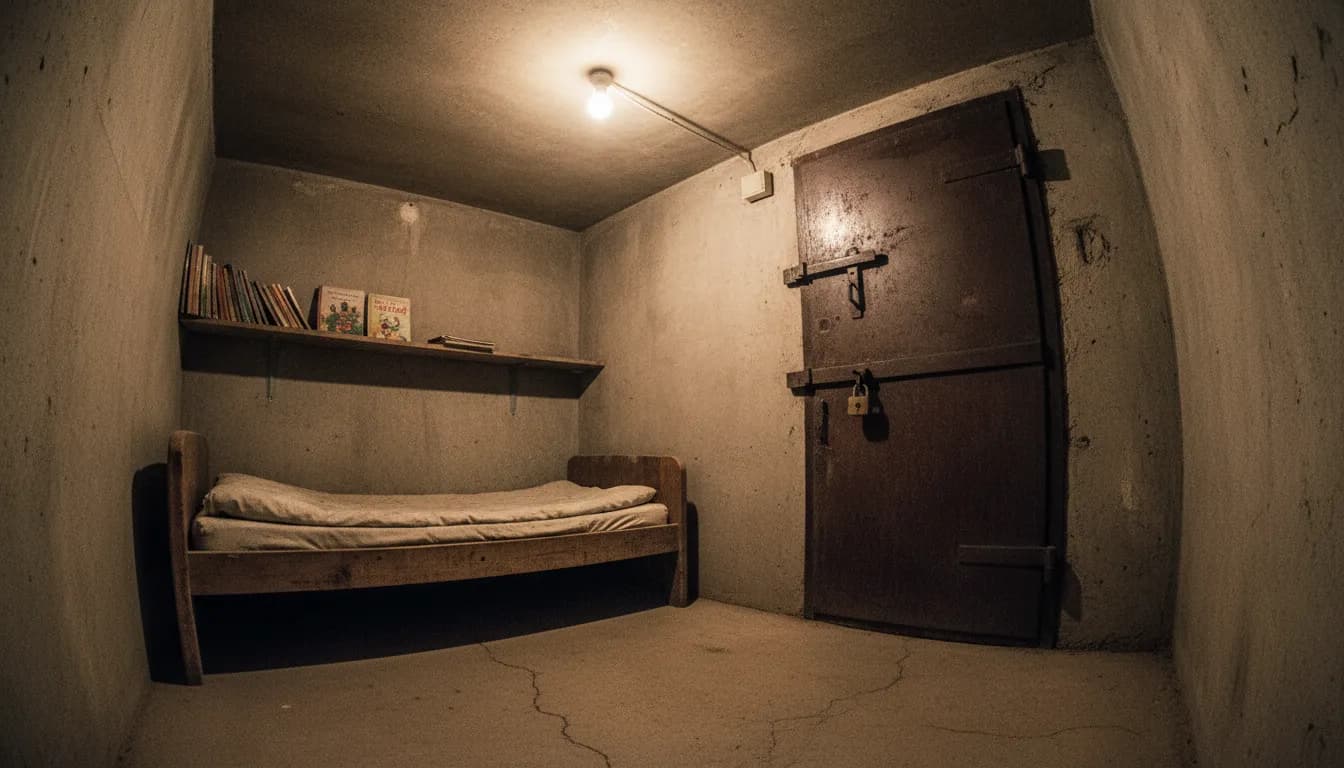
Freitzl, born April 9, 1935, had methodically prepared the prison. Between 1981 and 1983, he converted a concealed cellar space into a windowless chamber, installing a washbasin, toilet, bed, hot plate, and refrigerator. The roughly 600-square-foot dungeon was accessed through a series of reinforced electronic doors, making escape virtually impossible. When Elisabeth disappeared, Fritzl told police and family members she had run away to join a religious cult—a story he supported with a forged letter that authorities accepted without serious investigation.
Inside the cellar, Elisabeth gave birth to seven children fathered by her captor. One infant died shortly after birth, leading to a negligent homicide charge against Fritzl. Three of the surviving children were removed as infants and placed with Fritzl and his wife Rosemarie, who were approved as foster parents. Social services accepted the story that Elisabeth had abandoned the children to pursue her religious beliefs. Three children remained in the cellar with their mother throughout the entire captivity, receiving their only education from Elisabeth herself.
Rosemarie Fritzl, Josef's wife, lived in the house above the dungeon. She maintained she was unaware of what occurred beneath her feet, though she approved the fostering arrangement and accepted her husband's explanation for their daughter's disappearance. For nearly a quarter-century, the family's dark secret remained hidden from the outside world.
Elisabeth had one previous attempt at escape. In January 1983, at age 17, she ran away to Vienna. Police located her and returned her to the house—directly into her father's hands. Fritzl used this escape attempt to justify increasingly severe control measures.
During her 24-year confinement, Elisabeth had almost no contact with the outside world beyond television and newspapers. Fritzl visited the cellar almost daily, bringing supplies and subjecting her to ongoing sexual abuse. The psychological and physical toll was immeasurable, yet Elisabeth maintained enough mental resilience to educate her three children born in captivity.