True crime news logo

Sign up for our newsletter and get the latest stories

Never miss the latest true crime news, reviews and top lists — plus new podcasts, series, films and books.

You can unsubscribe with one click from any email.

True crime news logo

The international true crime destination. Cases, documentaries, podcasts and travel routes.

© 2026 truecrime.news. All rights reserved.

Sagsmappe

Edmund Kemper: From Troubled Child to Serial Killer

How a teenager who murdered his grandparents became California's 'Co-ed Killer'

Mappe Åbnet: JUNE 6, 2025 AT 10:00 AM
A figure resembling Edmund Kemper stands outside a suburban California house, towering ominously with a vacant stare, while neighbors pass by unaware, symbolizing the hidden horrors lurking beneath the surface.
BEVIS

Sagsdetaljer

Quick Facts

Klassifikation:

Serial killer
Familicide
Psychopathy
Dismemberment
California
Violence
Unsolved case

Quick Facts

LocationNorth Fork, California, USA

Edmund Emil Kemper was born on December 18, 1948, in Burbank, California—a child who would become one of America's most infamous serial killers. But his descent into violence began not in adulthood, but at 15 years old.

On August 27, 1964, Kemper murdered his grandmother, Maude Matilda Kemper, shooting her once in the head and twice in the back before stabbing her repeatedly. He then killed his grandfather, Edmund Emil Kemper Sr., with a rifle in the driveway. After committing both murders, Kemper called police himself and reported what he had done.

What happened next would prove catastrophic for his future victims. Despite the brutality of his crimes, Kemper spent fewer than five years in confinement and treatment. His juvenile criminal record was expunged, and he received a diagnosis of schizophrenia—though he would later admit to fabricating the auditory hallucinations that supposedly justified the diagnosis. Released to his mother's care, Kemper was back in society with minimal accountability for double homicide.

For nearly a decade, he remained relatively quiet. Then, in May 1972, Kemper began a new killing spree that would last over a year.

Operating in Santa Cruz County, Kemper targeted hitchhikers—primarily college-aged women. Between May 1972 and April 1973, he murdered six female college students and one female high school student. His method was calculated and methodical: he would pick up the hitchhikers, then shoot, stab, smother, or strangle them. After transporting the bodies home, he would decapitate them, engage in necrophilia, and dismember the remains. The press dubbed him the "Co-ed Killer."

But Kemper's killing spree wasn't limited to strangers. On Good Friday in April 1973, he turned on his own mother. He struck her in the head with a hammer, cut her throat with a knife, and decapitated her. In an act of particular cruelty, he removed her hands and larynx, disposing of the larynx in the garbage disposal. Shortly after murdering his mother, Kemper also killed her friend by strangulation.


Murder
Dna evidence
Asphyxiation
Necrophilia
hvidvaskning
mordsager
magtmisbrug
sundhedsbedrageri
catfishing
banksvindel
cyberangreb
finanskriminalitet
mordssag
justitssvigt
domstol
justitsmordet
gerningsmandspsykologi
Sagsstatus
Løst
Sted
North Fork, California, USA

With nine murders to his name, Kemper was finally arrested and charged with eight counts of first-degree murder in connection with the co-ed killings and his mother's death. His trial took place in October 1973, and he was found guilty of all charges by early November. The court sentenced him to eight concurrent life sentences.

Kemper had requested the death penalty, but California had suspended capital punishment at the time of his conviction. Instead, he was consigned to life imprisonment.

Today, decades later, Kemper remains incarcerated at the California Medical Facility in Vacaville. Age and deteriorating health have taken their toll—he is confined to a wheelchair, incontinent, and in poor health. Despite his condition, parole remains off the table. A parole hearing held in July resulted in another denial, ensuring that Kemper will spend the remainder of his life behind bars.

The case of Edmund Kemper remains a stark reminder of how failures in the juvenile justice system and mental health evaluation can have devastating consequences. A killer who murdered his grandparents as a teenager and was released within five years went on to claim nine more lives. Had the system treated his crimes with the severity they deserved, countless deaths might have been prevented.

**Sources:** https://en.wikipedia.org/wiki/Edmund_Kemper https://www.biography.com/crime/edmund-kemper https://www.aetv.com/articles/edmund-kemper-serial-killers-helping-fbi-interviews https://csi.pressbooks.pub/uncserkill/chapter/chapter-9-ed-kemper/ https://lookout.co/i-wanted-to-see-the-co-ed-killer-in-a-wheelchair-old-and-broken-down-revisiting-edmund-kemper/story

Read more

Root of Evil unveils the Hodel family's dark past
Podcast

The Hodel Dynasty: Secrets, Abuse, and the Black Dahlia

A figure resembling Lonnie Franklin Jr. stands in a modest South Los Angeles neighborhood, near a cordoned-off crime scene, capturing the dark history of the "Grim Sleeper" serial murders.
Case

Grim Sleeper: 22 Years of Terror in South Los Angeles

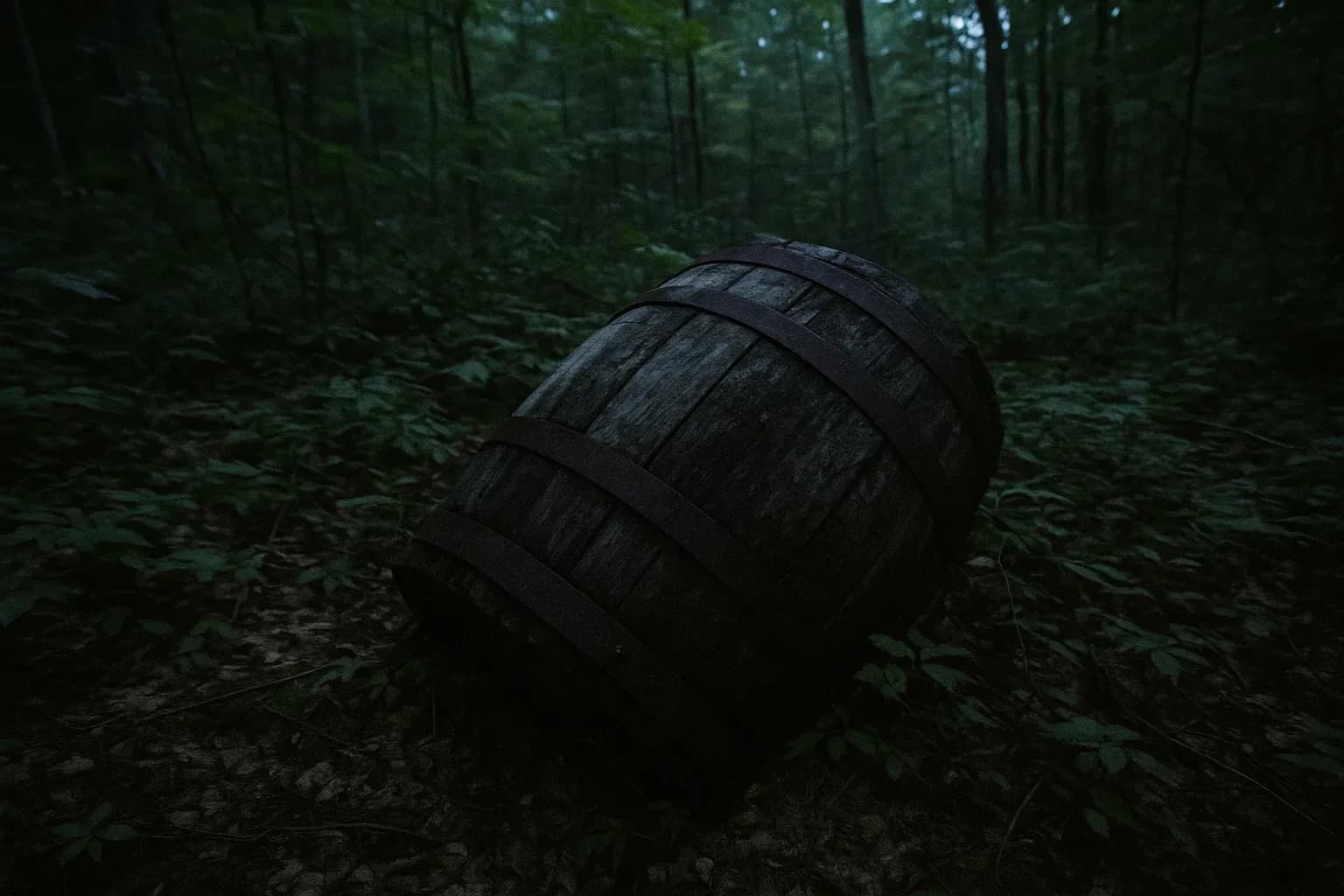
A weathered, wooden barrel half-buried in dense New Hampshire forest foliage, signifying the hidden evidence that eventually exposed serial killer Terry Peder Rasmussen through DNA analysis.
Case

Bear Brook Murders: From Barrels to Serial Killer

Related Content
Root of Evil unveils the Hodel family's dark past

The Hodel Dynasty: Secrets, Abuse, and the Black Dahlia

A figure resembling Lonnie Franklin Jr. stands in a modest South Los Angeles neighborhood, near a cordoned-off crime scene, capturing the dark history of the "Grim Sleeper" serial murders.

Grim Sleeper: 22 Years of Terror in South Los Angeles

A weathered, wooden barrel half-buried in dense New Hampshire forest foliage, signifying the hidden evidence that eventually exposed serial killer Terry Peder Rasmussen through DNA analysis.

Bear Brook Murders: From Barrels to Serial Killer

A figure resembling Richard Trenton Chase stands in front of a dilapidated Sacramento apartment building, casting an eerie presence over the scene, evoking the chilling atmosphere of his reign of terror in the late 1970s

The Vampire of Sacramento: America's Most Deranged Serial Killer

Advertisement
SS

Susanne Sperling

View all stories →
Share this post: