Ocean Parkway 2010: Discovery ignites hunt for LISK
On a cold December day in 2010, a police dog made a gruesome discovery in a thicket by Ocean Parkway on Long Island, New York, during the search for a missing woman. The discovery of this single body triggered a massive search that, within days, uncovered human remains from several other women. This marked the beginning of one of America's most complex serial killer investigations. The case, known as the Gilgo Beach murders or the Long Island Serial Killer (LISK), now includes between 10 and 16 victims, primarily sex workers, over a period of nearly 20 years. The timeline stretches from Shannan Gilbert's disappearance in 2010 to the shocking arrest of architect Rex Heuermann in 2023. It is a tragic story of lost lives, a long and difficult investigation into brutal murders, and society's often overlooked dark underbelly.
Shannan Gilbert's disappearance leads to 'Gilgo Four'
The entire investigation began with the disappearance of 23-year-old sex worker Shannan Gilbert on May 1, 2010. She left a client's home in Oak Beach, Long Island, under mysterious circumstances. Her panicked 911 call, in which she screamed that someone was chasing her, and her last known action – knocking on a neighbor's door – remained unexplained. Six months later, in December 2010, during the intensive search specifically for Shannan Gilbert, K-9 officer John Mallia and his dog Blue made the first fateful discovery: the body of Melissa Barthelemy, wrapped in distinctive burlap fabric. In the following days, police found three more bodies along Ocean Parkway: Amber Costello (27), Megan Waterman (22), and Maureen Brainard-Barnes (25). These four women quickly became known as the 'Gilgo Four.' They had several things in common: they were all petite women under 5'3" (160 cm), worked as online escorts, and had all been victims of strangulation.
2011 discovery: 'Peaches', 'Baby Doe' reveal killer's span
Between March and April 2011, police significantly expanded the search area, leading to the discovery of six more sets of human remains along the same stretch of Ocean Parkway. Among these finds were the skull of Jessica Taylor, whose torso had been found in Manorville as far back as 2003, and partial remains of Valerie Mack, whose earlier discovery in 2000 was not initially linked to a serial killer. These findings indicated that the perpetrator now being hunted could have been active for years. Particularly disturbing was the discovery of the remains of an unidentified Asian person, dressed in women's clothing – a victim who became known as 'Asian Doe' or 'John Doe No. 6' – and nearby, an infant, later identified as the person's daughter. The child's age was estimated at 16-24 months. This child became unofficially known as 'Baby Doe,' and the mother was later nicknamed 'Peaches' due to a tattoo. These unidentified victims underscored the horrifying scope of the case and the tragic fates of those who can disappear without being missed by the wider community.
Investigative hurdles: Profiling and stalemate despite leads
The investigation into these murders faced enormous challenges. An early profile of the perpetrator pointed to a local individual with intimate knowledge of Ocean Parkway and the surrounding wetlands, possibly a hunter or nature enthusiast, due to the use of burlap sacks – a material often found in such environments. It was also assumed that the perpetrator owned a car, possibly a Chevrolet Avalanche, and exhibited traits that could indicate sadism or other forms of psychopathy. Despite massive investigative efforts, years passed without a decisive breakthrough in the hunt for this serial killer.
Breakthrough: Pizza crust DNA, burner phones link to Heuermann
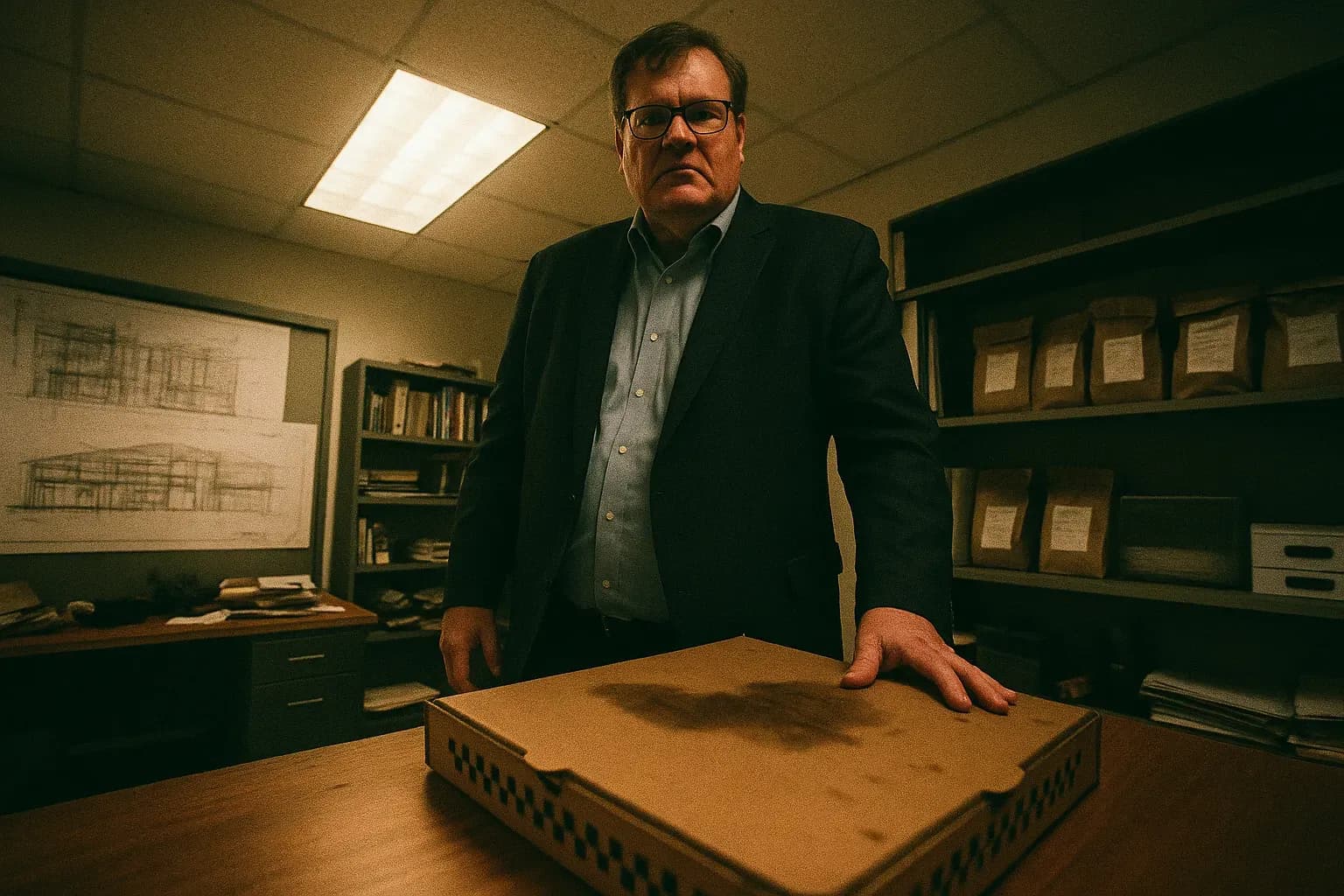
A crucial breakthrough finally came in 2022-2023 when a new, dedicated task force resumed the investigation with renewed energy and the use of advanced methods. Through a combination of traditional police work and modern DNA analysis, they managed to narrow down a suspect. A key piece of DNA evidence came from a discarded pizza crust found in a trash can near Rex Heuermann's office in New York City. Mitochondrial DNA from this crust matched a hair found on Maureen Brainard-Barnes, one of the victims. Simultaneously, analysis of cell tower data from so-called burner phones, used to contact the victims, revealed that a large number of calls originated from areas in Midtown Manhattan and Massapequa Park – precisely where Rex Heuermann worked and lived.
Rex Heuermann arrested: Double life and hidden secrets exposed
The arrested individual was 59-year-old Rex Heuermann, an established architect from Massapequa Park and owner of the firm RH Consultants. Outwardly, he lived an apparently normal family life with a wife and two children. But behind this facade, the investigation revealed a dark and disturbing reality. In his home, police found 92 registered firearms, and on seized burner laptops, they discovered over 200 searches related to serial killers, violence, and extreme pornography, including torture porn. It emerged that Heuermann allegedly used fake online profiles to contact his victims. Investigators also noted that the timing of his wife's annual trips to Iceland coincided with the periods of the murders of three of the Gilgo Four victims, potentially giving him an 'operational window' to carry out his actions. This shocking double life stunned both neighbors and the general public in New York and across the United States.
Victims' stories: Waterman's struggle, Costello's final call
The victims in the Gilgo Beach case were more than just names in a police investigation; they were individuals with complex lives and dreams. Megan Waterman's story is a sad journey from a difficult childhood in Portland, Maine, to becoming a teenage mother and struggling with low-wage jobs before eventually working as a sex worker. Her final days were spent in a hotel on Long Island, New York, trapped by addiction and financial hardship. Amber Costello disappeared after a call from a client who wanted to meet late at night. Neighbors claimed to have seen a Chevrolet Avalanche driving away from her home after her disappearance, and her body was found with part of the hair on her neck cut off – a detail later linked to Rex Heuermann's internet searches for 'trophies' from victims. The unidentified victims, including the Asian individual ('Asian Doe'/'Peaches') and her daughter, highlight the profound vulnerability of marginalized individuals who risk disappearing from society's radar.
Heuermann trial: Strong evidence faces DNA defense doubts
The prosecution's case against Rex Heuermann is built on a strong combination of evidence: the crucial mitochondrial DNA match from the pizza crust and a hair found on a victim, cell tower data from the 4G network linking his phones to multiple crime scenes, a digital image archive of over 2,000 pictures on his computer allegedly showing the victims, and purchase receipts for burlap sacks dated immediately before each murder. The defense, led by Heuermann's lawyer, conversely focuses on casting doubt on the integrity of the DNA evidence and police evidence-handling procedures. They also claim that the police have had a biased approach and point out that Heuermann's wife could potentially have had access to both the weapons and the burlap sacks in question. The upcoming trial has already brought increased focus on how the U.S. justice system handles cases of violence against sex workers, and victims' families have formed advocacy groups to fight for better protection of marginalized groups.
Shannan Gilbert's fate: Theories and DNA ethical questions
Although Shannan Gilbert's 2010 disappearance was the direct reason the search along Ocean Parkway was initiated, Rex Heuermann has not yet been charged with her death. Renowned forensic pathologist Michael Baden has concluded that Shannan Gilbert was likely strangled, contradicting the police's initial theory of an accidental drowning in the marsh where her body was eventually found in December 2011. Shannan Gilbert's case thus remains partially unsolved within the broader LISK investigation, and her mother's own tragic murder in 2016 further underscores the enormous human costs associated with these crimes. Investigators estimate that Heuermann could be responsible for up to 16 murders, and the question of possible accomplices, especially considering his wife's potential knowledge, remains unresolved. Furthermore, the use of commercial DNA databases in solving the Long Island Serial Killer case has sparked an important ethical debate about the balance between privacy and the pursuit of justice.
The Gilgo Beach case: Society's failings and the long search
The Gilgo Beach murders reveal not only the monstrous actions of a suspected serial killer but also deeper structural weaknesses in society and the American justice system. From the initial under-prioritization of investigating missing sex workers to the technological advancements in DNA analysis that ultimately led to an arrest, this case represents both a profound crisis and an opportunity for improvement. While the complex trial against Rex Heuermann is expected to continue, Ocean Parkway on Long Island remains a silent witness to the many lost lives – a grim reminder that even in a densely populated area of New York, evil and darkness can find refuge, and the hunt for a serial killer can span decades.
Delve into more cases about serial killers and complex investigations. Follow KrimiNyt for reality's darkest crimes.