True crime news logo

Sign up for our newsletter and get the latest stories

Never miss the latest true crime news, reviews and top lists — plus new podcasts, series, films and books.

You can unsubscribe with one click from any email.

True crime news logo

The international true crime destination. Cases, documentaries, podcasts and travel routes.

© 2026 truecrime.news. All rights reserved.

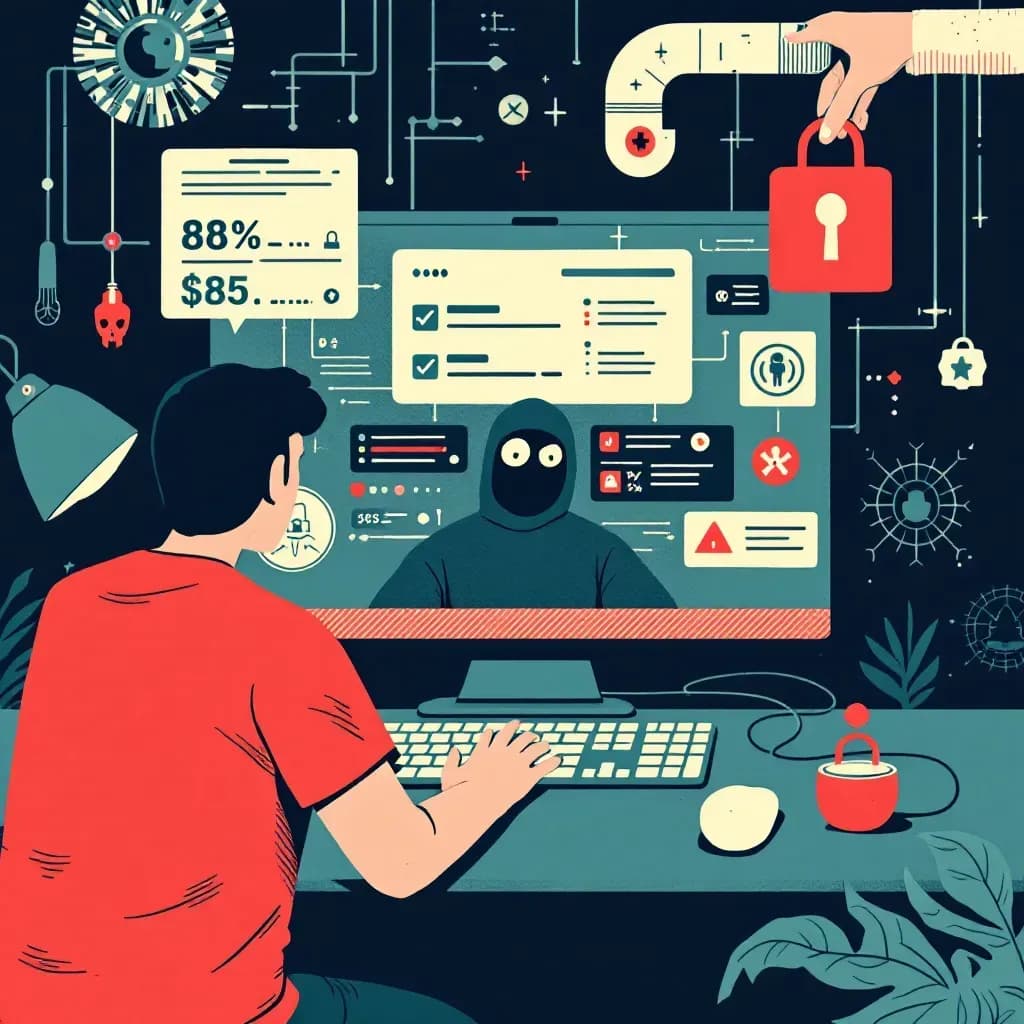
A digital scene depicting a computer screen with a hacker accessing stolen personal data, various digital icons representing phishing and malware attacks, and a distressed person viewing their compromised identity information.

Identity theft

From stolen data to ruined lives – how digital fraudsters operate

When your identity becomes a criminal's weapon. Understand what identity theft is, how it happens, and the devastating consequences for victims.


From stolen data to ruined lives – how digital fraudsters operate


What is identity theft and why is it personal?


Within true crime, identity theft is a serious criminal act where a perpetrator unlawfully acquires and misuses another person's sensitive personal information. This goes beyond simple theft of possessions; it is a deeply personal violation where the victim's identity becomes a tool for the criminal. The goal is often financial gain through fraud, or to commit further scams and other crimes in the victim's name. The consequences of identity theft are typically devastating and long-lasting. The perpetrator can take out loans, order goods, empty bank accounts, or use the identity to cover their own criminal tracks, leaving the victim in a nightmare of debt, suspicion, and a ruined credit rating.


Phishing, malware, breaches: How criminals steal identity


The perpetrators behind identity theft employ a wide range of methods. These include sophisticated digital attacks, such as phishing emails designed to trick victims into revealing login credentials, and malware discreetly installed to steal data directly from computers and mobile devices. However, more traditional methods like mail theft or theft of physical documents also occur. Often, extensive data breaches at companies are exploited, where large amounts of personal information, including names, addresses, and personal identification numbers, are compromised and become available to criminals. Regardless of the method used – whether high-tech cybercrime or physical theft – the goal is identical: to exploit the stolen identity for personal gain. This can involve creating fake profiles to commit further fraud or executing complex scams. This type of crime exposes the vulnerability of our increasingly digital society, where personal data has become a coveted commodity on the black market.


The victim's struggle: From trauma to complex investigation


For victims of identity theft, the experience is often deeply traumatic and extends far beyond the immediate financial loss. It entails an exhausting battle to clear their name, restore their damaged creditworthiness, and convince authorities and creditors that they are innocent victims of fraud and scams. The fundamental violation of one's personal integrity, combined with the ensuing insecurity and mistrust, can have serious psychological consequences. Investigations into identity theft cases are typically complicated and resource-intensive. Perpetrators often operate anonymously online and across borders, making tracking and prosecution extremely difficult. This combination of profound personal violations, the extensive consequences of the fraud committed, and the complex investigative challenges makes identity theft an increasingly relevant and disturbing phenomenon within true crime. It highlights a modern threat to individual online security and personal integrity in a digital age.


See how digital fraudsters destroy lives and finances. Did this pique your interest? Delve into real-life cases of identity theft – find our compelling case studies below.


Posts Tagged “Identity theft”

26 posts
Christian Gerhartsreiter — Rockefeller-bedrager
CaseMay 7, 2026

Christian Gerhartsreiter — The Rockefeller Impostor

Christian Gerhartsreiter was a German con artist who lived under more than twenty false identities across the United States for three decades, most notably as Clark Rockefeller, a purported member of the famous Rockefeller family. In 2012, he was convicted of murdering John and Marlene Sohus in Los Altos Hills, California in 1985, crimes he had concealed through his elaborate web of fabricated identities.

Identity theftMurderAmerikansk kriminalitet+5
The Tinder Swindler reveals dating's dark side
FilmFebruary 26, 2026

The Tinder Swindler: How a Conman Exposed Dating's Dark Side

In February 2022, Netflix released *The Tinder Swindler*, a documentary exposing how Israeli conman Shimon Hayut, posing as diamond heir Simon Leviev, defrauded dozens of women across Europe through Tinder. Using forged identities and emotional manipulation, Hayut orchestrated a Ponzi scheme that targeted unsuspecting victims seeking romance, ultimately scamming them out of an estimated $10 million.

FraudDatingNetflix+22
Sweet Bobby reveals the human cost of deceit
FilmDecember 18, 2025

Netflix's Sweet Bobby Exposes UK's Longest Catfishing Scam

Kirat Assi, a London radio presenter, spent nearly a decade in a virtual relationship with 'Bobby Jandu,' a supposed cardiologist she believed she knew. In October 2024, Netflix released Sweet Bobby: My Catfish Nightmare, revealing the entire romance was an elaborate hoax perpetrated by her own cousin, Simran Bhogal.

FraudManipulationPsychopathy+13
The Girl in the Picture: Society's Blind Spots
FilmAugust 14, 2025

The Girl in the Picture: One Woman's Hidden Tragedy

Sharon Marshall, known to the world as Tonya Hughes, was abducted as a child, sexually assaulted, and forced into marriage by Franklin Delano Floyd. Her death in a 1990 hit-and-run sparked an investigation that would eventually expose a web of crimes spanning decades.

FamilicideSerial killerNetflix+19
A laptop screen displaying the Ashley Madison logo amidst lines of code, symbolizing the 2015 data breach that exposed millions of users and led to global blackmail and personal tragedies
CaseJune 6, 2025

Ashley Madison Breach: 37 Million Exposed in 2015 Hack

In July 2015, hackers calling themselves "The Impact Team" breached Ashley Madison, a website marketed for extramarital affairs, stealing personal data from approximately 37 million users across 40 countries. The incident exposed not only intimate details but also widespread corporate deception that defined the scandal.

Data breachExtortionScandal+32
A cracked Equifax logo on a glass door with reflection of anonymous figures in suits, symbolizing espionage and security failure, against the backdrop of a busy urban landscape.
CaseJune 6, 2025

U.S. Charges Chinese Military Officers in Massive Equifax Hack

U.S. federal prosecutors charged four members of China's People's Liberation Army on February 10, 2020, with orchestrating one of the largest data breaches in history. The defendants allegedly exploited a vulnerability in Equifax's systems to steal sensitive information from approximately 145 million Americans over a two-month period in 2017.

Data breachIdentity theftCrypto+29
A figure resembling Christopher Wylie, in a casual jacket, stands in an office surrounded by computer screens displaying data visualizations, symbolizing the Facebook-Cambridge Analytica scandal.
CaseJune 6, 2025

How Cambridge Analytica Harvested 87 Million Facebook Users

Between 2013 and 2015, a British political consulting firm called Cambridge Analytica systematically harvested personal data from 87 million Facebook users without consent. When exposed in March 2018, the scandal triggered a global reckoning over tech platform accountability that continues today.

CorruptionConspiracy theoryManipulation+20
A figure resembling Jussie Smollett stands outside a Subway restaurant in Chicago’s Streeterville area, glancing towards the empty street, bundled in a heavy coat.
CaseJune 6, 2025

Actor Jussie Smollett Convicted in Staged Hate Crime Hoax

On January 29, 2019, actor Jussie Smollett reported being attacked in Chicago's Streeterville neighborhood in what he claimed was a hate crime. Two years later, he was convicted of orchestrating the entire incident himself, enlisting accomplices to stage the assault for publicity.

Hate crimesFalse reportHigh-profile case+10
A quiet Hollywood street at night, a leash lying on the ground near where Lady Gaga's dog walker was shot, with a small amount of blood on the pavement, and the city lights in the background.
CaseJune 6, 2025

Celebrity Dog Theft Gone Global: The Lady Gaga Robbery

On February 10, 2021, dog walker Ryan Fischer was shot during an armed robbery in Los Angeles that netted two French bulldogs belonging to pop icon Lady Gaga. The high-profile case exposed a lucrative international market for stolen designer dogs and raised questions about security vulnerabilities targeting celebrity pet handlers.

RobberyShootingFamilicide+15
A laptop screen displaying lines of code and visible API tokens, surrounded by notes and diagrams illustrating a data scraping scheme related to LinkedIn profiles, in a cluttered tech workspace.
CaseJune 6, 2025

700 Million LinkedIn Users' Data Sold on Dark Web Forum

In June 2021, a hacker using the username TomLiner posted personal data from approximately 700 million LinkedIn users—roughly 93% of the platform's membership—for sale on the dark web forum RaidForums. LinkedIn disputed the characterization as a breach, arguing the data came from public profiles and external sources rather than a direct hack of its systems.

Data breachCybercrimeHacking+16
A Starwood-branded server room with tangled Ethernet cables and a laptop displaying a web shell interface, symbolizing the vulnerability exploited in Marriott's data breach affecting 500 million guests
CaseJune 6, 2025

Marriott's Massive Breach: 383 Million Guests Exposed

Marriott International disclosed on November 30, 2018, that hackers had accessed its Starwood guest reservation database for approximately four years, affecting up to 383 million guests. The breach exposed sensitive personal information including names, addresses, passport numbers, and encrypted payment data—making it one of the largest data compromises in history.

Data breachIdentity theftEspionage+21
A safe with the Mt. Gox logo stands open in a dimly lit Tokyo office. Papers are strewn across the desk, and a monitor displays declining Bitcoin values, symbolizing the collapse and chaos of 2014.
CaseJune 6, 2025

The Mt. Gox Collapse: How Bitcoin's Largest Exchange Lost $450M

In February 2014, Mt. Gox—once the world's largest Bitcoin exchange—abruptly suspended trading and went offline, revealing the theft of over 744,000 Bitcoins worth approximately $450 million. The collapse exposed critical vulnerabilities in early cryptocurrency infrastructure and led to the arrest of CEO Mark Karpelès, a French businessman who had acquired the exchange just three years earlier.

Economic crimeCryptoHacking+22
A compromised Microsoft Exchange server displays a terminal screen filled with cryptic code, cables snaking out as a technician in the background examines the setup, symbolizing the widespread impact of the 2021 Hafnium cyberattack.
CaseJune 6, 2025

Chinese State Hackers Breached Thousands via Microsoft Exchange

A state-sponsored Chinese threat actor known as HAFNIUM launched a sophisticated cyberattack against Microsoft Exchange servers beginning January 6, 2021, remaining undetected for two months before Microsoft's March disclosure revealed the breach had compromised thousands of organizations worldwide.

CybercrimeEspionageData breach+21
A computer screen displays the Robinhood logo alongside an alert notification icon, symbolizing the massive user data breach and subsequent cybersecurity scandal.
CaseJune 6, 2025

7 Million Robinhood Users Hit in November 2021 Data Breach

Robinhood, the popular investment app, suffered a significant data breach on November 3, 2021, exposing personal information belonging to approximately 7 million users. The unauthorized access occurred through social engineering of a customer support employee.

Data breachEconomic crimeHacking+16
An empty, ornate frame hangs on a wall inside the Isabella Stewart Gardner Museum, its label barely visible. This haunting reminder of the 1990 heist symbolizes the enduring mystery of the missing Vermeer and Rembrandt masterpieces.
CaseJune 6, 2025

America's Greatest Art Heist: 34 Years Unsolved

On March 18, 1990, two men posing as Boston police officers walked into one of America's most prestigious museums and walked out with 13 masterpieces worth over $500 million. Three decades later, the perpetrators remain at large and not a single painting has been recovered.

Art theftMafiaUnsolved case+17
A damaged museum security camera lies on the floor of the Mohammed Mahmoud Khalil Museum, wires dangling, symbolizing the theft and security failures surrounding Van Gogh's missing "Poppy Flowers" painting in Cairo
CaseJune 6, 2025

Van Gogh's Poppy Flowers Stolen Twice From Cairo Museum

A Vincent van Gogh painting worth an estimated $50–55 million vanished from Cairo's Mahmoud Khalil Museum on August 21, 2010, cut from its frame in broad daylight. It was the second time the work had been stolen from the institution—and this time, it has never been recovered.

Art theftMuseumUnsolved case+20
A figure resembling Kim Jong-un watches a scene from "The Interview" on a laptop screen, the Sony Pictures logo visible in the background, symbolizing the motive behind the North Korean cyber attack on Hollywood.
CaseJune 6, 2025

North Korea's Hack on Sony: A Cyber Attack on Free Speech

In November 2014, North Korean state-sponsored hackers infiltrated Sony Pictures Entertainment, stealing millions of files and threatening theaters showing the comedy film 'The Interview.' The attack marked the first time the U.S. government publicly attributed a cyber assault to a nation-state—and raised urgent questions about digital security and censorship.

CybercrimeAssassinationExtortion+26
A figure resembling Vincenzo Peruggia stands near the empty display in the Louvre Museum where the Mona Lisa once hung, with space void of its famous masterpiece, hinting at the painting's audacious heist in 1911.
CaseJune 6, 2025

The Italian Painter Who Stole the Mona Lisa

On August 21, 1911, Vincenzo Peruggia, an Italian house painter working in Paris, removed the Mona Lisa from the Louvre Museum and smuggled it out under his worker's smock. His theft—motivated by a belief that the painting belonged in Italy—remained undetected for two years, until his own attempt to return it led to his arrest and the painting's triumphant recovery.

MuseumUnsolved caseFrance+14
A computer screen displaying a terminal with lines of code, a reflection showing a faint Amazon logo, symbolizing the Twitch 2021 leak exposé of streamers' earnings and Amazon's unreleased projects.
CaseJune 6, 2025

Twitch Breach Exposed Top Streamers' Million-Dollar Payouts

A hacker breached Twitch's internal systems in early October 2021, leaking source code, passwords, and payout data for thousands of streamers. The leaked information exposed two years of earnings data, revealing that top creators earned millions from subscriptions, ad revenue, and Bits donations.

Data breachHackingInternet+17
A figure resembling Joe Sullivan sits at a wooden desk, an open laptop in front of him displaying a swirling Bitcoin transaction graphic, symbolizing the controversial payment to hackers during the 2016 Uber data breach cover-up.
CaseJune 6, 2025

Dutch Regulator Fines Uber €290M for Illegal Data Transfers

The Dutch Data Protection Authority (DPA) issued a €290 million fine to Uber Technologies and Uber B.V. on August 26, 2024, for transferring personal data of European drivers to the United States without implementing mandatory legal safeguards required under GDPR.

Data breachHigh-profile caseBribery+13

Showing first 20 of 26 posts. Use search or filters to find more.