True crime news logo

Sign up for our newsletter and get the latest stories

Never miss the latest true crime news, reviews and top lists — plus new podcasts, series, films and books.

You can unsubscribe with one click from any email.

True crime news logo

The international true crime destination. Cases, documentaries, podcasts and travel routes.

© 2026 truecrime.news. All rights reserved.

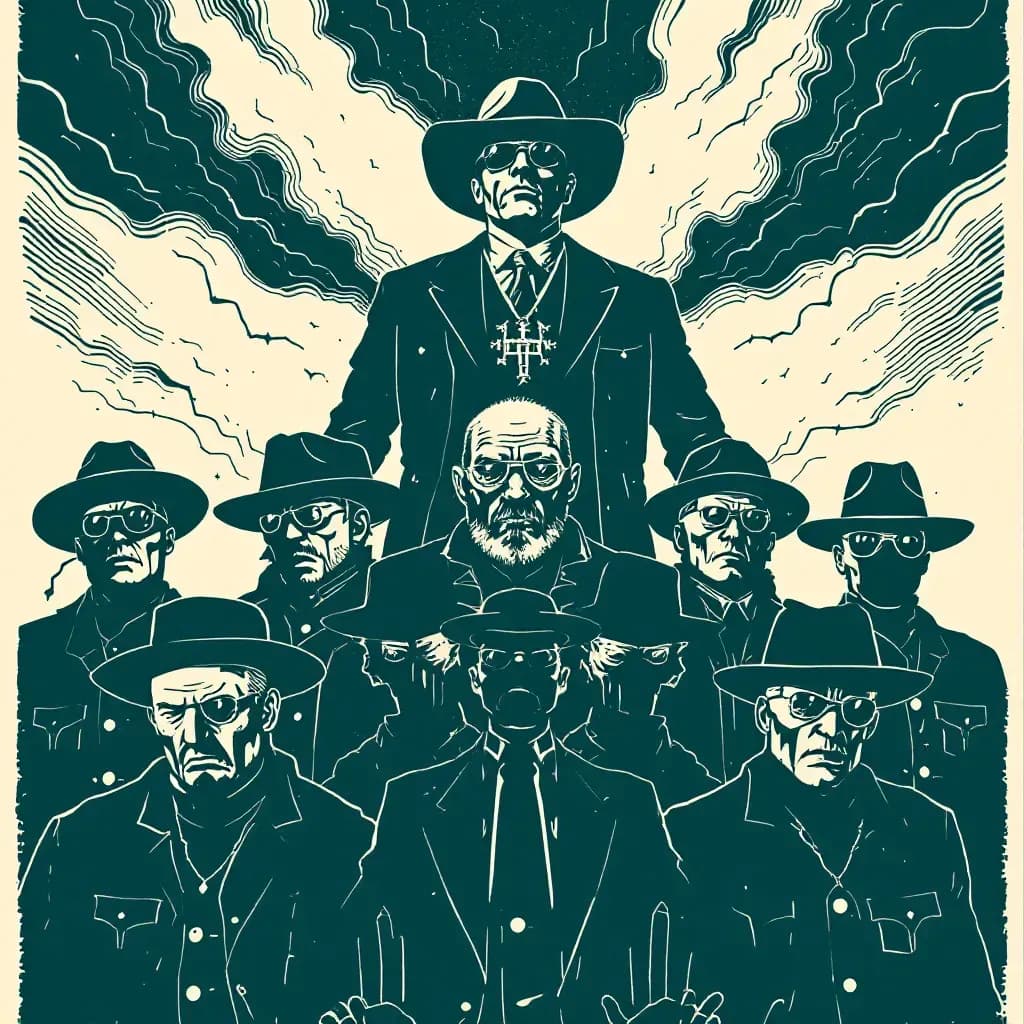
A hierarchy of criminal leaders, with a powerful gang leader at the top orchestrating hidden network operations, surrounded by intermediaries, illustrating the complexity and elusiveness of dismantling organized crime.

Leadership

How criminal networks are managed and combated – from hierarchy to covert operations

Who pulls the strings? Understand the complex forms of leadership in crime, from gang leaders to hidden networks, and why they are so difficult to target.


How criminal networks are managed and combated – from hierarchy to covert operations


Criminal leadership: Why is it crucial for understanding?


Leadership in crime refers to the processes and individuals who direct and control criminal activities and organizations. This concept covers more than just the formal leader of a gang or cartel; it also encompasses the underlying dynamics that enable the planning, coordination, and execution of crimes – from minor offenses to extensive international operations, often seen in organized crime. A thorough understanding of these leadership structures is essential, as it illuminates how criminal networks are established, operate, and potentially dissolve, as well as how power and influence are used to achieve criminal goals.


From autocrat to hidden network: Hard to dismantle


Leadership styles in criminal environments vary considerably. Some criminal organizations, including certain forms of gang crime, are characterized by a strict hierarchy with a dominant, often charismatic or fearsome, leader at the top whose decisions are absolute. Other groups, particularly within more complex networks of organized crime, may operate decentrally, where subordinate leaders or cells possess significant autonomy, or where leadership is more fluid and situational. Regardless of the organizational form, effective leadership is crucial for maintaining internal discipline, ensuring member loyalty, facilitating recruitment, and protecting against rival groups as well as law enforcement efforts. Authorities' investigations often aim to identify and neutralize this leadership, as this can destabilize the entire criminal enterprise. Uncovering chains of command, communication networks, and internal power structures is therefore a vital part of the strategy to combat both gang crime and other organized crime.


Behind the facade: Why is top tier crime hard to reach?


A key challenge in understanding and combating criminal leadership is its often deeply hidden nature and the sophisticated methods used to evade detection. Leaders in organized crime, for example, frequently distance themselves from the direct execution of criminal acts by operating through intermediaries and complex chains of command, which complicates proving their direct involvement. Furthermore, leadership is often exercised through intimidation, threats, violence, and psychological manipulation, creating a fear-based environment that effectively deters witnesses from cooperating with authorities. The analysis of leadership structures and power distribution in criminal cases is therefore not only crucial for solving specific crimes but also contributes to a deeper insight into the overall nature of crime and the underlying mechanisms that shape criminal behavior.


Did this pique your interest? Explore cases of organized crime and gang wars where leadership is crucial – find our exciting cases below.


Posts Tagged “Leadership”

5 posts
Dirty Billions expose money laundering at Danske Bank
BookDecember 17, 2025

Danske Bank's $230 Billion Money Laundering Scandal

Between 2007 and 2015, Danske Bank's Estonia branch processed approximately €200 billion in suspicious transactions, predominantly from Russian and former Soviet clients. The scheme—revealed publicly in September 2018—ranks among history's largest money laundering operations and triggered criminal charges, multi-billion-dollar penalties, and individual convictions across three continents.

Money launderingEconomic crimeCorruption+17
A figure resembling Iqbal Khan stands on a bustling Zurich street, checking his watch with a wary expression, as anonymous figures in the background appear to be following him discreetly.
CaseJune 6, 2025

Swiss Banking Scandal: Credit Suisse's Illegal Surveillance of Departing Executive

Credit Suisse hired private investigators to monitor its former wealth management chief Iqbal Khan after he joined competitor UBS in 2019. The resulting case of corporate surveillance, intimidation and potential coercion was settled in 2021, shedding light on ruthless internal politics in global finance.

SurveillanceScandalCorruption+21
A safe with the Mt. Gox logo stands open in a dimly lit Tokyo office. Papers are strewn across the desk, and a monitor displays declining Bitcoin values, symbolizing the collapse and chaos of 2014.
CaseJune 6, 2025

The Mt. Gox Collapse: How Bitcoin's Largest Exchange Lost $450M

In February 2014, Mt. Gox—once the world's largest Bitcoin exchange—abruptly suspended trading and went offline, revealing the theft of over 744,000 Bitcoins worth approximately $450 million. The collapse exposed critical vulnerabilities in early cryptocurrency infrastructure and led to the arrest of CEO Mark Karpelès, a French businessman who had acquired the exchange just three years earlier.

Economic crimeCryptoHacking+22
A figure resembling Joe Sullivan sits at a wooden desk, an open laptop in front of him displaying a swirling Bitcoin transaction graphic, symbolizing the controversial payment to hackers during the 2016 Uber data breach cover-up.
CaseJune 6, 2025

Dutch Regulator Fines Uber €290M for Illegal Data Transfers

The Dutch Data Protection Authority (DPA) issued a €290 million fine to Uber Technologies and Uber B.V. on August 26, 2024, for transferring personal data of European drivers to the United States without implementing mandatory legal safeguards required under GDPR.

Data breachHigh-profile caseBribery+13
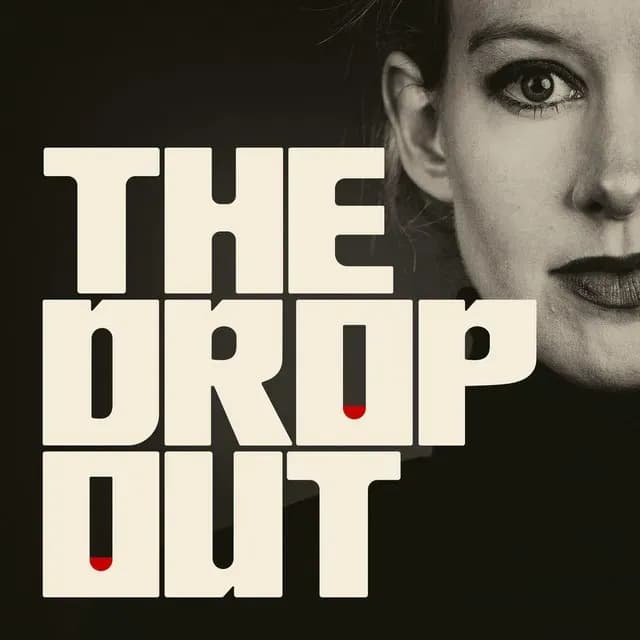
The Dropout reveals the depths of the Theranos scandal
PodcastMay 26, 2025

The Dropout: Inside the Theranos Fraud That Changed Healthcare

In October 2015, Wall Street Journal reporter John Carreyrou exposed Theranos as a fraud, revealing that the company's Edison blood-testing machine could not perform the hundreds of tests it claimed. The scandal led to the conviction of founder Elizabeth Holmes in January 2022 and a sweeping investigation into one of Silicon Valley's most ambitious—and most dishonest—companies.

Economic crimeFraudBiotech+27