True crime news logo

Sign up for our newsletter and get the latest stories

Never miss the latest true crime news, reviews and top lists — plus new podcasts, series, films and books.

You can unsubscribe with one click from any email.

True crime news logo

The international true crime destination. Cases, documentaries, podcasts and travel routes.

© 2026 truecrime.news. All rights reserved.

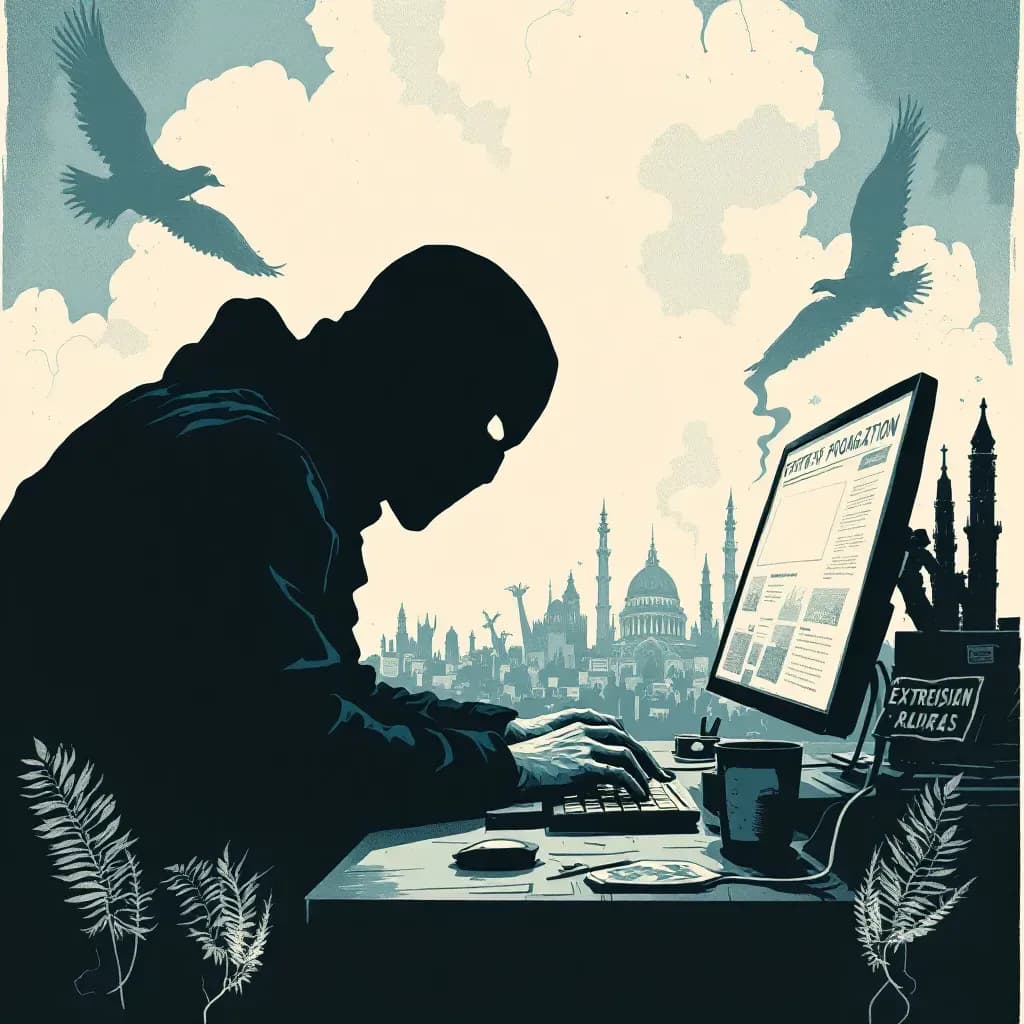
A shadowy figure hunched over a computer screen, surrounded by extremist propaganda, symbolizing the online radicalization process; an ominous atmosphere with hints of danger and societal impact.

Radicalization

The process leading to violent extremism and terror

Radicalization: The gradual path to violent extremism. Understand the process, online dangers, and its profound consequences for society and victims.


The process leading to violent extremism and terror


What is radicalization and why a path to violence?


Radicalization, a key concept in true crime, describes the often gradual process by which a person or group adopts and internalizes extreme ideologies. These ideologies can legitimize and motivate violent acts, serious crime, and, in the most extreme cases, terrorism. It is rarely a sudden transformation but rather a development where an individual's worldview narrows significantly, and the distance to society's common norms and values increases dramatically. Understanding this dynamic is crucial in many true crime cases, as it sheds light on how seemingly ordinary people can end up committing heinous crimes in service of a cause they perceive as just or necessary.


Propaganda: What ignites and sustains radicalization?


The process can be fueled by a complex cocktail of personal vulnerabilities, social factors such as isolation or intense group pressure, and strong influence from extremist propaganda. This propaganda is often spread effectively via online platforms, increasing the risk of online radicalization. Once an individual is caught in a radicalized environment, it can be extremely difficult to break free, as echo chambers and like-minded individuals constantly confirm and reinforce extreme beliefs. The consequences of radicalization extend far beyond the direct victims of the violence or terror that may follow; they also inflict deep scars on families and local communities and create widespread fear and mistrust in society as a whole.


From thought to terror: Radicalization's big challenge


Investigating crimes rooted in radicalization poses an enormous challenge for authorities. It requires a delicate balance between identifying potential threats to society and respecting fundamental individual rights. Predicting who will cross the line from extreme thinking to actual violent action is notoriously difficult. A thorough understanding of the complex mechanisms of radicalization is therefore not only crucial for effective investigation and solving committed crimes, including violence and terrorism, but is also essential for long-term efforts to prevent extremism and the tragic consequences it entails.


How does radicalization lead to terror and violence? Delve into real-life cases of Radicalization – find our compelling cases below.


Posts Tagged “Radicalization”

7 posts
Cui Bono: Wie ein Podcast die Radikalisierung von Ken Jebsen offenlegte
PodcastMay 8, 2026

Podcast Exposed Ken Jebsen's Radicalization

The prize-winning ARD podcast 'Cui Bono' follows Ken Jebsen's shocking transformation from respected Berlin radio host to conspiracy theory spreader. The series became a bestseller and set new standards for audio journalism.

Ken JebsenCui BonoARD+3
Attentat Mannheim 2024
CaseMay 8, 2026

Mannheim Attack 2024

On May 31, 2024, a knife attack occurred at Marktplatz in Mannheim, Germany, during a demonstration by the right-wing extremist group Die Basis and pro-Palestinian activists. A 25-year-old man of Afghan origin wounded six people, including five police officers present to maintain order at the demonstration.

MannheimGermanyknivangreb+5
Roujan Ismaeel
CaseApril 20, 2026

DNA Breakthrough 29 Years Too Late in Copenhagen Child Murder

A seven-year-old girl's murder in Copenhagen in 1995 has finally been solved through advanced DNA analysis—29 years after her body was discovered. The identified suspect died in 2012, leaving Danish prosecutors unable to bring charges in a case that highlights both the promise and limits of modern forensic science.

Roujan IsmaeelTerrorismIslamisk Stat+9
The Threat Within: Uncovering Denmark's Hidden Terror Patterns
BookDecember 7, 2025

Inside Denmark's Hidden Terror Networks

In 2009, Danish journalist Morten Skjoldager published a groundbreaking investigation into four major terror cases that exposed how radicalization spread through mosques, bedrooms, and online spaces across Denmark, revealing previously undisclosed connections between disparate cells of young Muslim men planning attacks.

TerrorRadicalizationDenmark+16
Family Murder Reveals Deadly Consequences of War Trauma
BookSeptember 8, 2025

When Warriors Return: A Danish Family's Tragedy and War Trauma

In July 2016, a 37-year-old Danish military veteran killed both his parents with an axe at their summer home in eastern Denmark. A new book by journalists and scholars explores how unmanaged combat-related trauma and PTSD can spiral into catastrophic violence—a story increasingly relevant across NATO nations.

FamilicideWarfarePsychopathy+17
A figure resembling Natascha Colding-Olsen, wearing a hijab, stands by a school fence in Kundby, holding a notebook and bottle of chemicals, with concerned onlookers nearby, symbolizing her radicalization and terror plot intentions.
CaseJune 6, 2025

From Bullied Teenager to ISIS Recruit: The Kundby Case

In January 2016, Danish authorities arrested a 15-year-old girl from a small Sealand village for planning bomb attacks on schools. Her rapid transformation from bullying victim to ISIS sympathizer has become a landmark case in Scandinavian counterterrorism.

Kundby-pigenISISRadicalization+3
A figure resembling Timothy McVeigh in handcuffs, escorted by federal agents, near a smoldering Murrah Building in Oklahoma City, debris still scattered on the ground
CaseJune 6, 2025

Timothy McVeigh: America's Deadliest Domestic Terror Attack

On April 19, 1995, Timothy McVeigh detonated a truck bomb at the Alfred P. Murrah Federal Building in Oklahoma City, killing 168 people—including 19 children—in what remains the deadliest act of domestic terrorism in U.S. history. Six years later, he was executed by lethal injection.

TerrorAssassinationMass death+18