True crime news logo
  • Krimidex

Sign up for our newsletter and get the latest stories

Never miss the latest true crime news, reviews and top lists — plus new podcasts, series, films and books.

You can unsubscribe with one click from any email.

True crime news logo

The international true crime destination. Cases, documentaries, podcasts and travel routes.

© 2026 truecrime.news. All rights reserved.

Krimidex/finanskriminalitet
Concept

finanskriminalitet

An umbrella term for economically motivated crimes involving fraud, embezzlement, money laundering, and securities violations. Not a unified federal offense, but a category encompassing multiple federal statutes targeting financial misconduct.
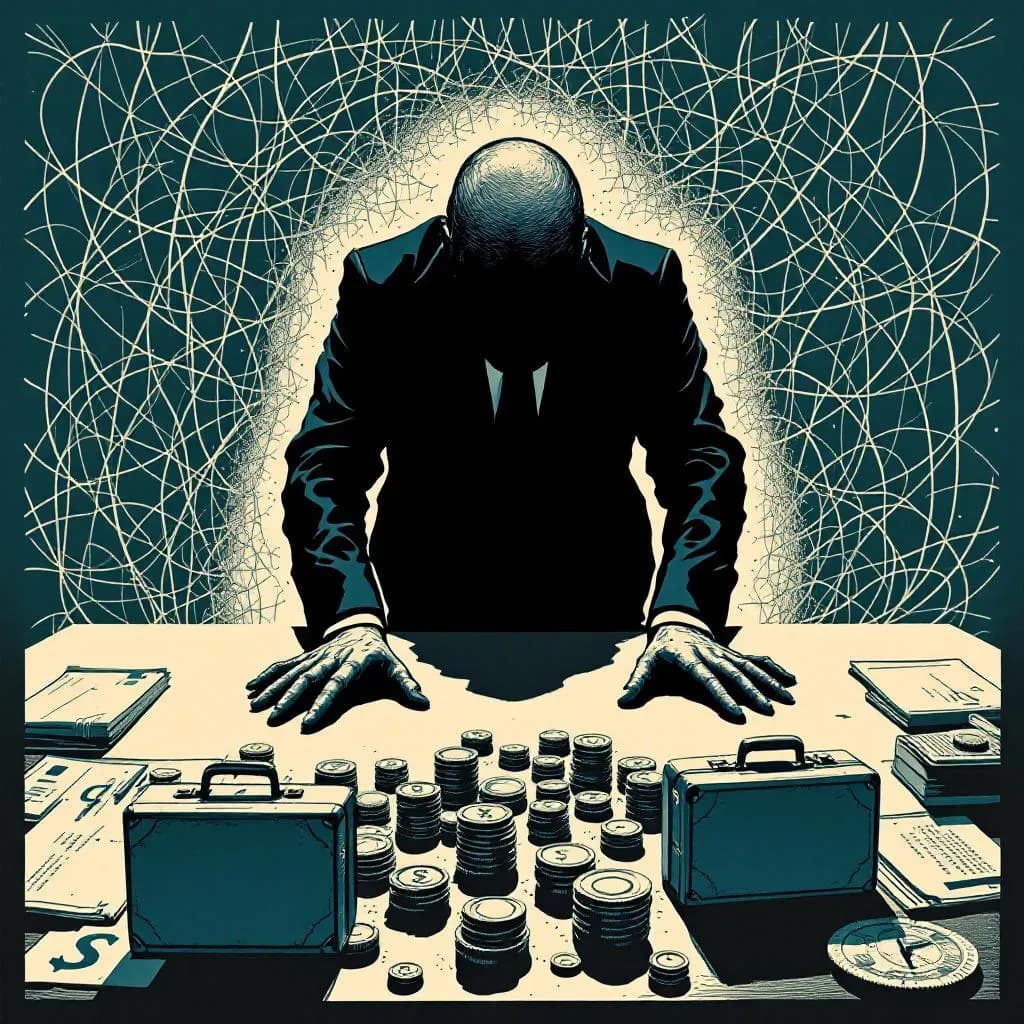
finanskriminalitet — Krimidex illustration

Definition

Financial crime refers to a broad category of criminal offenses motivated by unlawful economic gain and characterized by deception, breach of trust, or manipulation of financial systems. Unlike violent crime or property crime, financial crime typically involves transactions, accounting records, and money flows as both the means and the evidence of criminal activity. In U.S. federal law, there is no single statute defining financial crime as a unified offense; instead, the term serves as a practical designation for various white-collar offenses prosecuted under distinct federal provisions.

The most prominent federal statutes addressing financial crime include money laundering under 18 U.S.C. § 1956, which criminalizes conducting financial transactions using proceeds from specified unlawful activities with intent to promote illegal activity, conceal the source of funds, or evade taxes. Wire fraud (18 U.S.C. § 1343), bank fraud (18 U.S.C. § 1344), and securities fraud under the Securities Exchange Act of 1934 also constitute core financial crime statutes. These laws target different methods of financial deception but share the common element of economic motivation and harm to financial integrity.

In true crime contexts, financial crime cases often involve complex paper trails, forensic accounting, and prolonged investigations by specialized federal agencies such as the FBI's Financial Crimes Section, the Securities and Exchange Commission, and the Internal Revenue Service Criminal Investigation Division. High-profile cases frequently involve corporate executives, investment advisors, or organized criminal enterprises engaged in sophisticated schemes to defraud investors, launder illicit proceeds, or manipulate markets.

The penalties for federal financial crimes vary widely depending on the specific statute violated, the amount of loss involved, and the defendant's role in the scheme. Money laundering under § 1956, for example, carries a maximum sentence of 20 years imprisonment, while aggravated cases involving financial institutions can result in consecutive sentences. Courts often consider victim impact, the sophistication of the scheme, and efforts to obstruct justice when determining sentences within federal sentencing guidelines.


Related entries

finanskriminalitet

Cases

No cases yet.

Related articles

Sanjay Shah – Cum-Ex-svindel for 9 milliarder kroner

Sanjay Shah – The Cum-Ex Fraud That Cost Denmark £1 Billion

Sanjay Shah orchestrated a systematic dividend tax fraud against the Danish state from his base in Dubai, costing taxpayers at least 9 billion kroner. Operating through his London hedge fund Solo Capital Partners between 2012 and 2015, he built an international network of financial intermediaries to exploit weaknesses in the Danish tax refund system. The case is the largest tax fraud in Danish legal history, culminating in a 12-year prison sentence handed down by Retten i Glostrup in August 2024.

Påstået DR-dokumentar om Wirecard-skandalen ikke bekræftet

Alleged DR Documentary on the Wirecard Scandal Unconfirmed

A claimed DR documentary about the German financial scandal Wirecard could not be verified through archive searches or programme listings. The Untold True Crime podcast investigated why one of Europe's biggest fraud cases appears to have never received in-depth documentary treatment from Danish public broadcasting.

Die Krypto-Königin: Ruja Ignatova und der OneCoin-Betrug

The Crypto Queen: Ruja Ignatova and OneCoin

Ruja Ignatova founded OneCoin, one of history's largest financial frauds. She disappeared without a trace in October 2017 and remains on the FBI's Most Wanted list.

Ny Ethereum-standard åbner for handel mellem AI-agenter

Danish Alert: AI Can Now Trade Without Human Approval

A March 2026 Ethereum standard has enabled artificial intelligence agents to conduct commercial transactions without human authorization for the first time. The development, based on ERC-8183 protocol, creates formal pathways for autonomous AI-to-AI trading — opening opportunities for both legitimate commerce and potential criminal exploitation.

Netflix-serie afslører ny FLDS-leder efter Warren Jeffs

Netflix Exposes FLDS Cult: How American Polygamist Sect Controlled Thousands

Netflix's documentaries on the Fundamentalist Church of Jesus Christ of Latter-Day Saints (FLDS) offer international viewers an unprecedented look inside one of America's most secretive and authoritarian religious movements. Through survivor testimony and investigative filmmaking, these series expose decades of systematic abuse masked by religious doctrine.

Ny podcast undersøger mystisk cykelulykke med Australiens eks-premier

New Podcast Examines Cover-Up Claims in Australian Premier's Cycling Crash

A new investigative podcast has reopened scrutiny of a near-fatal 2013 cycling accident involving Daniel Andrews, then-opposition leader in Victoria, Australia. The series examines alleged political cover-up and the phone calls made immediately after the crash.

Gilgo Beach Killer erkender skyld i historisk drabssag

Gilgo Beach Killer Admits to Eight Murders in Guilty Plea

Rex Heuermann, a 62-year-old architect from Long Island, pleaded guilty on April 8, 2026, to murdering seven women and causing the death of an eighth in connection with the Gilgo Beach serial killings. The confession brings closure to one of New York's most notorious cold cases, with murders dating back to 1993.

UK True Crime Podcast dykker ned i Operation Julie

Operation Julie: How British Police Crushed a Global LSD Empire

In 1975, British police launched one of the most ambitious drug investigations ever undertaken, targeting two LSD manufacturing operations run from rural Wales and London. By 1977, over 800 officers from 11 police forces had dismantled what amounted to one of the world's largest acid production networks.

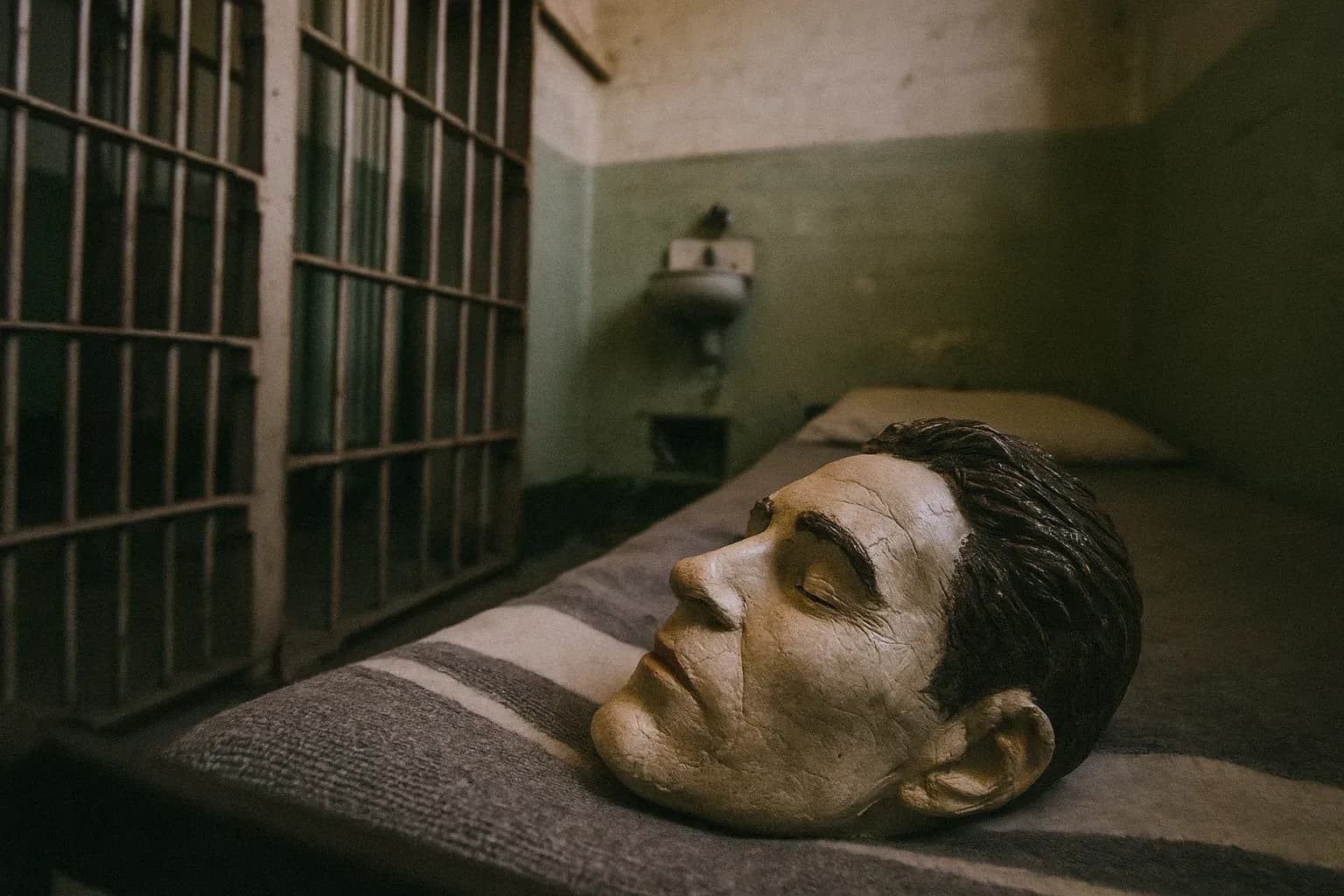
A lifelike dummy head made of plaster and paint rests on a prison bed in a dimly lit Alcatraz cell, the meticulously crafted hair and features hinting at the daring escape of Frank Morris and the Anglin brothers

The Alcatraz Escape That Remains Unsolved 60 Years Later

On the night of June 11, 1962, Frank Morris and brothers John and Clarence Anglin escaped from Alcatraz Federal Penitentiary in San Francisco Bay. Sixty years later, no confirmed evidence has emerged to prove whether they drowned in the cold Pacific waters or survived to live free.

A weathered, wooden barrel half-buried in dense New Hampshire forest foliage, signifying the hidden evidence that eventually exposed serial killer Terry Peder Rasmussen through DNA analysis.

Bear Brook Murders: From Barrels to Serial Killer

In November 1985, a boy kicking over a barrel in Bear Brook State Park, New Hampshire, uncovered the remains of two victims—beginning one of America's most haunting unsolved cases. Thirty-two years later, genetic genealogy identified the killer: Terry Peder Rasmussen, a man who had evaded justice under at least five aliases.

A figure resembling Dennis Rader stands in a suburban Wichita neighborhood, next to an unmarked police car, as officers discreetly observe nearby homes.

The Church Leader Who Was America's BTK Serial Killer

Dennis Rader, a Lutheran church council president and Boy Scout leader in Wichita, Kansas, murdered 10 people between 1974 and 1991 under the self-created alias BTK—standing for his method: Bind, Torture, Kill. His double life remained hidden for three decades until a careless digital mistake led to his arrest in 2005.

A figure resembling Edmund Kemper stands outside a suburban California house, towering ominously with a vacant stare, while neighbors pass by unaware, symbolizing the hidden horrors lurking beneath the surface.

Edmund Kemper: From Troubled Child to Serial Killer

Edmund Kemper murdered his grandparents at age 15 in 1964, then spent fewer than five years in detention before being released. A decade later, he would kill seven college students, his mother, and her friend in one of California's most disturbing serial killing sprees.

Facts

Type
Concept
Legal reference
18 U.S.C. § 1956 (money laundering); 18 U.S.C. § 1343 (wire fraud); 18 U.S.C. § 1344 (bank fraud)
Last updated
22 May 2026